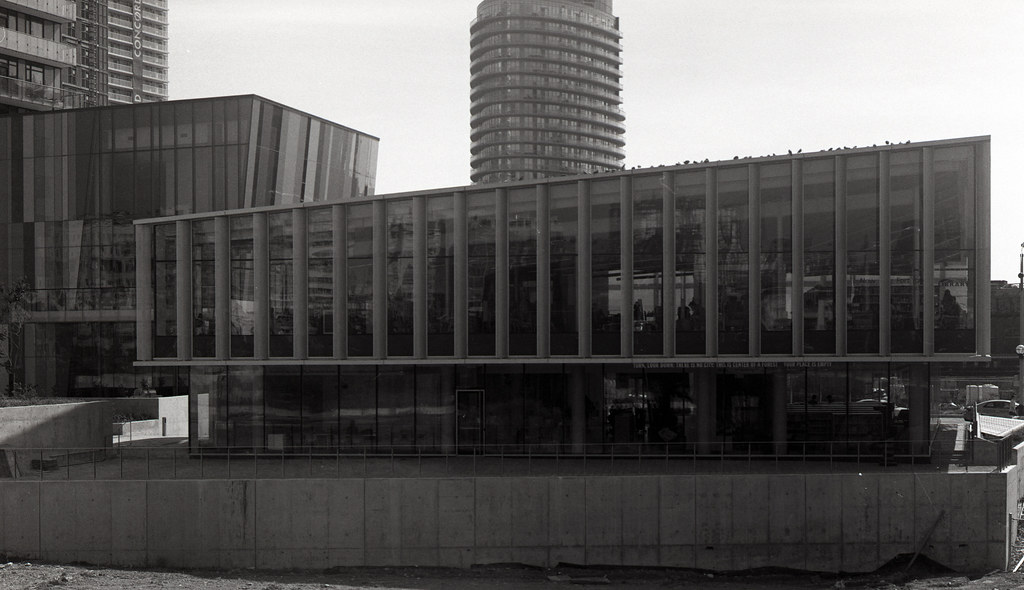
Fort York, Toronto’s taste of the 19th-Century. Against all the odds this little haven of Toronto’s colonial history has survived multiple attempts to sweep it away with the Gardner Expressway and even a Streetcar line. And while it seems a little odd to find a fort this far back from the lakeshore, you have to remember that over 200 years ago the lakeshore and the area we know as Toronto was a far different place.
Pentax 645 – SMC Pentax A 645 75mm 1:2.8 – Kodak TMax 400 – Kodak TMax Developer (1+4) 6:30 @ 20C
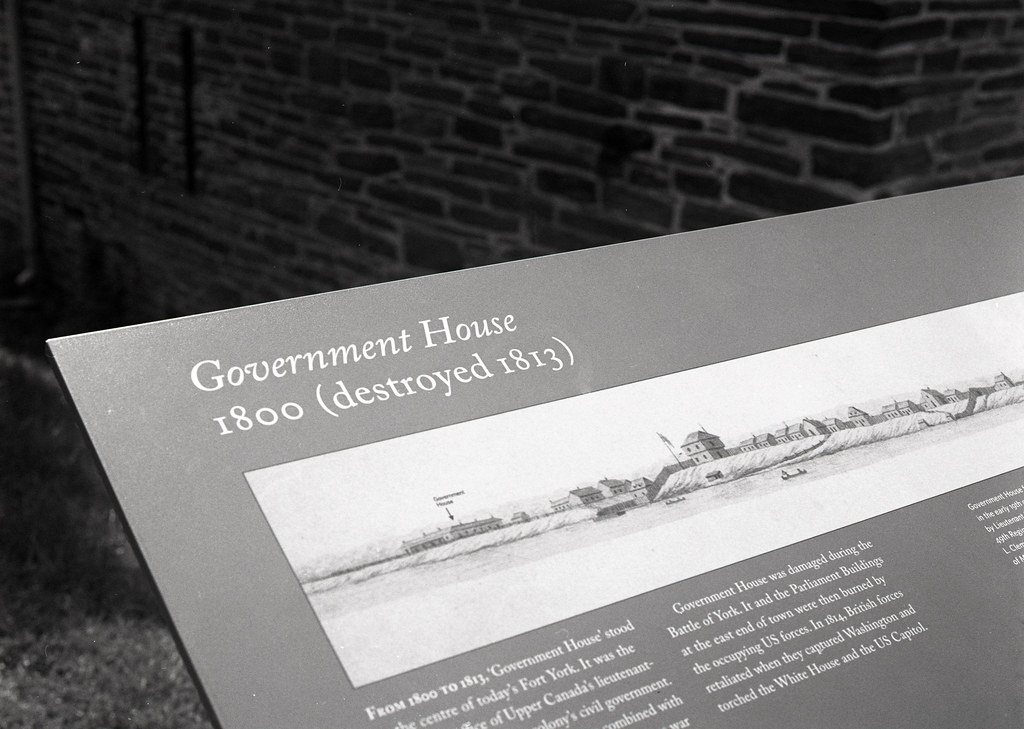
When Sir John Graves Simcoe received his appointment as the colonial governor of Upper Canada one of his early actions saw the colonial capital, the capital at the time, Newark, today Niagara-On-The-Lake, Ontario stood far too close to the newly established the United States of America. Seeing the tactical error in this, Simcoe ordered the establishment of the town of York and a garrison to protect both the town and the natural harbour. While the town of York, today Toronto, Ontario, would be established in 1793, construction of the Garrison began in 1797 on the eastern side of Garrison Creek. Today Garrison Creek is one of Toronto’s lost waterways today is covered by Bathurst Street. This first garrison was nothing more than a single blockhouse and a collection of wooden barracks. A powder magazine located near the government house at the current fort’s site rounded out the garrison.
Pentax 645 – SMC Pentax A 645 75mm 1:2.8 – Kodak TMax 400 – Kodak TMax Developer (1+4) 6:30 @ 20C
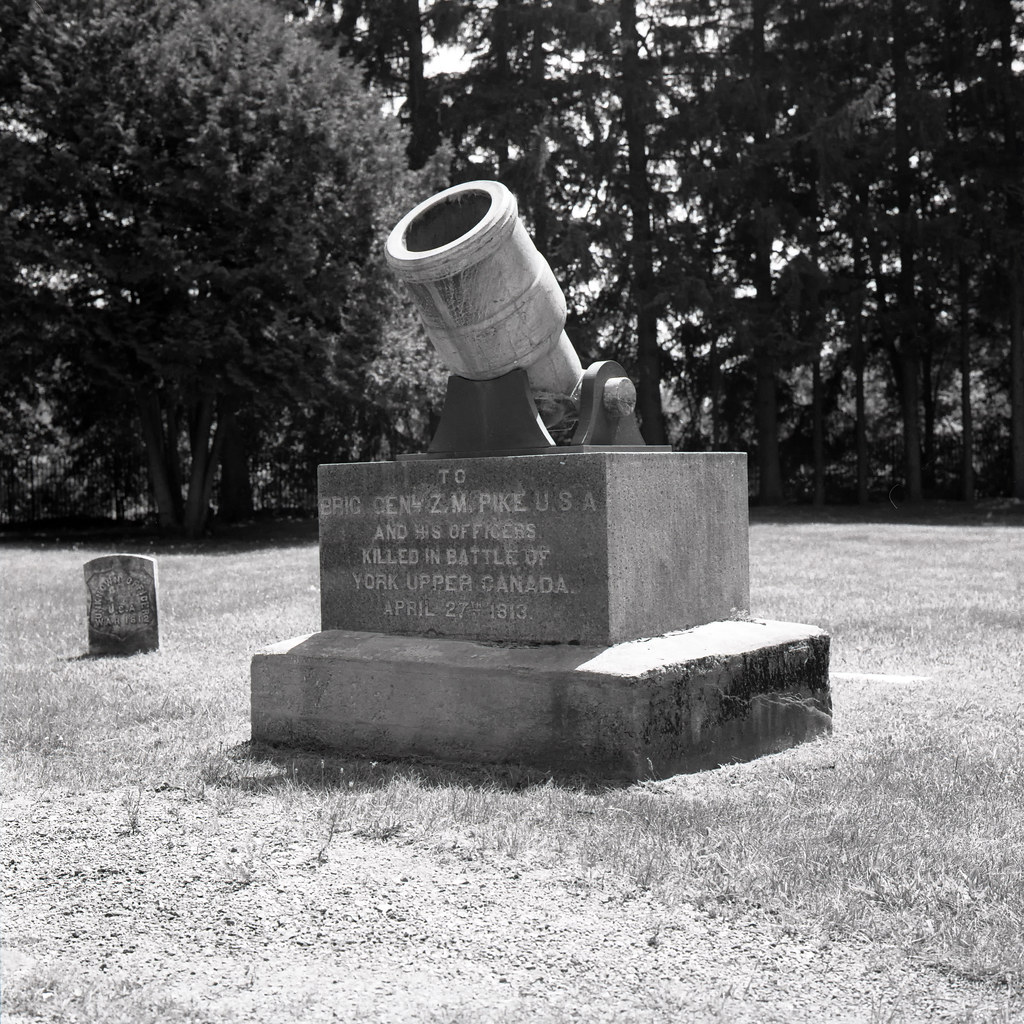
When the Americans declared war in 1812, the defences at York were not exactly in the best of shape. Only a handful of artillery, much of it long obsolete defended the colonial capital. And this was despite the ongoing program of improving the colony’s defences started by Sir Isaac Brock. But that first year of the war saw no action at York. After several defeats in 1812, the American army commander, Henry Dearborn needed a victory to lift the spirits of his men. Rather than go after a tactical target, he decided that capturing the colonial capital of York was a better option. On 27 April 1813, a large fleet of American ships appeared on the shores of Lake Ontario bombarding the shore defences and landing a large army. The British forces were quickly overwhelmed, and much to the annoyance of the local population retreated to Kingston under the orders of General Roger Hale Sheaffe.
Rolleiflex 2.8F – Carl Zeiss Planar 80mm 1:2.8 – Kodak TMax 400 – Kodak TMax Developer (1+9) 20:00 @ 20C
The result of the American occupation saw the town of York stripped of supplies and saw the destruction of all defensive structures including the garrison and several other blockhouses around the town. The town of York suffered another two raids in the summer of 1813 before the British army would return and reoccupy the town and begin reconstruction of the fort, this time on the western side of Garrison Creek where the current fort stands today. By 1814 the new fort was robust enough to repel another attempted raid by the Americans.
Pentax 645 – SMC Pentax A 645 75mm 1:2.8 – Kodak TMax 400 – Kodak TMax Developer (1+4) 6:30 @ 20C
After the War of 1812, Fort York expanded to defend the colonial capital better should the Americans try and invade a second time. A brick powder magazine and a pair of blockhouses surrounded by earthworks and several new artillery batteries were the first defensive structures built. Through the 1830s new brick barracks and officer’s quarters and a kitchen. By 1840 the shoreline had moved further south, rendering the old fort useless. A new fort, also named Fort York started construction in 1840 where the Canadian National Exhibition Grounds sit today. However, the old fort continued to see use during this period. Both forts would continue to serve both the British and later Canadian governments through the remainder of the 19th-Century. You can see a single building of the new fort, known as Stanley Barracks, post-1893, on the CNE grounds today.
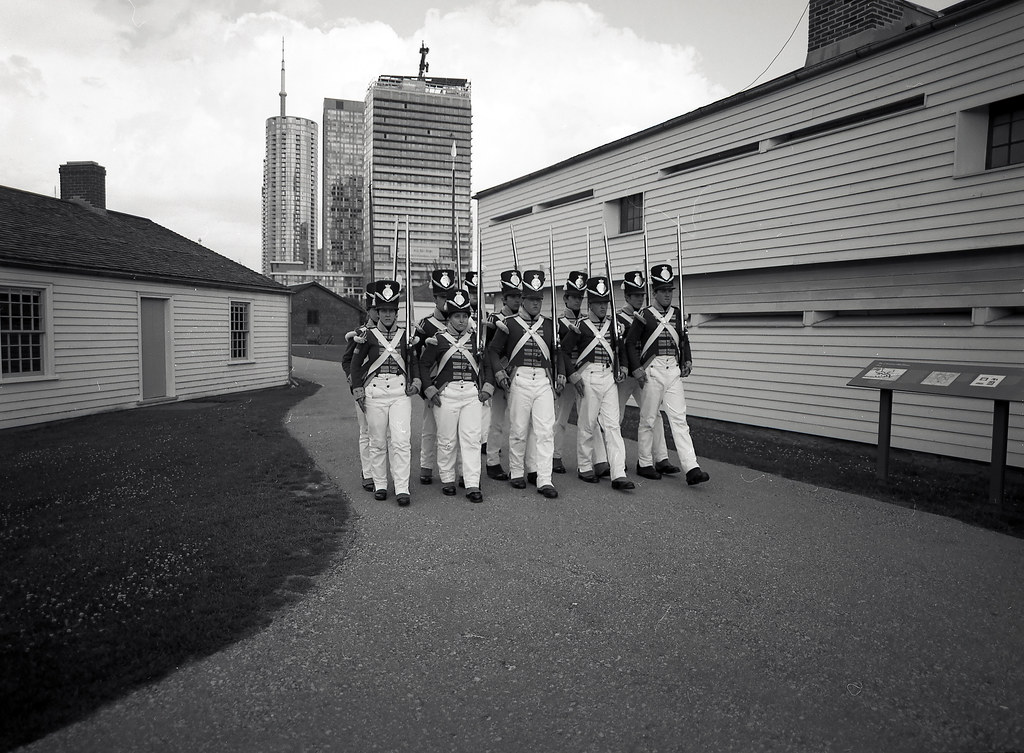
Pentax 645 – SMC Pentax A 645 35mm 1:3.5 – Ilford Pan F+ – Agfa Rodinal (1+100) 15:00 @ 20C
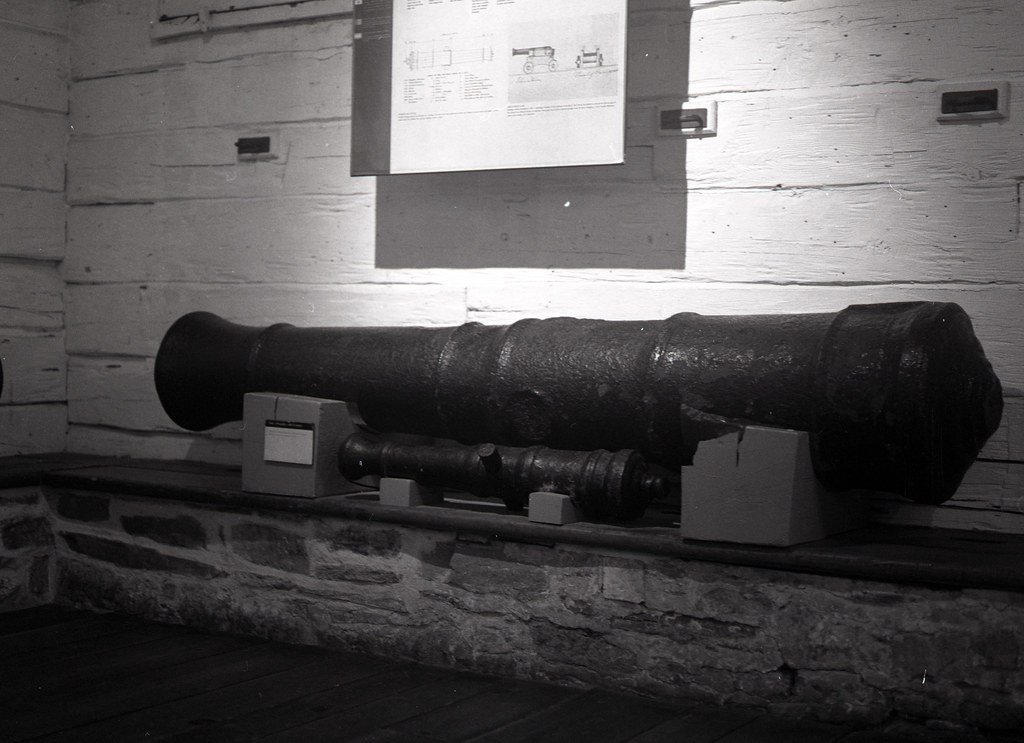
Despite the construction of New Fort York, the post saw military service with the British Army and then the Canadian Permanente Active Militia until 1880. In 1903 the Militia Department sold the old fort to the City of Toronto. It would be two years later in 1905 a streetcar line would threaten the old post, but the city rallied around their old garrison, and the line relocated to outside the earthworks. The old fort would again be called into military service during the First World War as it served as a training camp for members of the Canadian Expeditionary Force headed for the western front. While the new fort had a much darker service during WW1 as an internment camp for Canadians of German, Austro-Hungarian, and Turkish citizens considered to be enemy aliens. In 1923 the fort would be declared a National Historic Site. In World War Two both forts saw use as temporary housing and training camps for Canadian Troops. By the middle of the century, the many of the poorly built structures inside the walls were torn town having been falling apart since the end of the war. The construction of the Gardner Expressway would threaten to finish the job, but again the old fort remained much closer to the hearts of Torontonians. Despite the encroachment of the rail corridor, industry, and the Gardener Expressway the fort remained. Today the fort stands as a museum, a pocket of the 18th and 19th centuries among tall condo towers. Dedicated employees and students bring the fort alive dressed in period uniforms and clothing of soldiers and civilians. The structures are for the most part original or rebuilt from original materials and are filled with original artefacts such as one of the “Simcoe Guns” that saw service during the 1813 Battle of York.
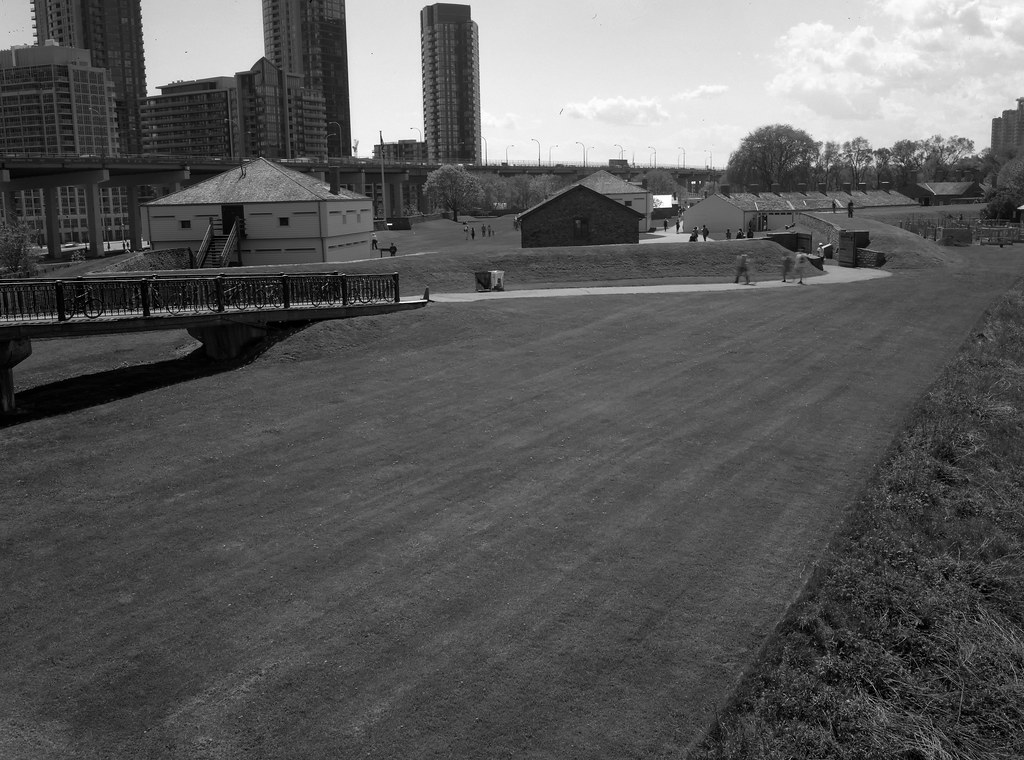
Modified Anniversary Speed Graphic – Fuji Fujinon-W 1:5.6/125 – Kodak Plus-X Pan (PXP) – Kodak HC-110 Dil. B 5:00 @ 20C
Written with files from:
Guidebook to the Historic Sites of the War of 1812 Second Edition by Gilbert Collins – 2006 The Dundurn Group Publishers