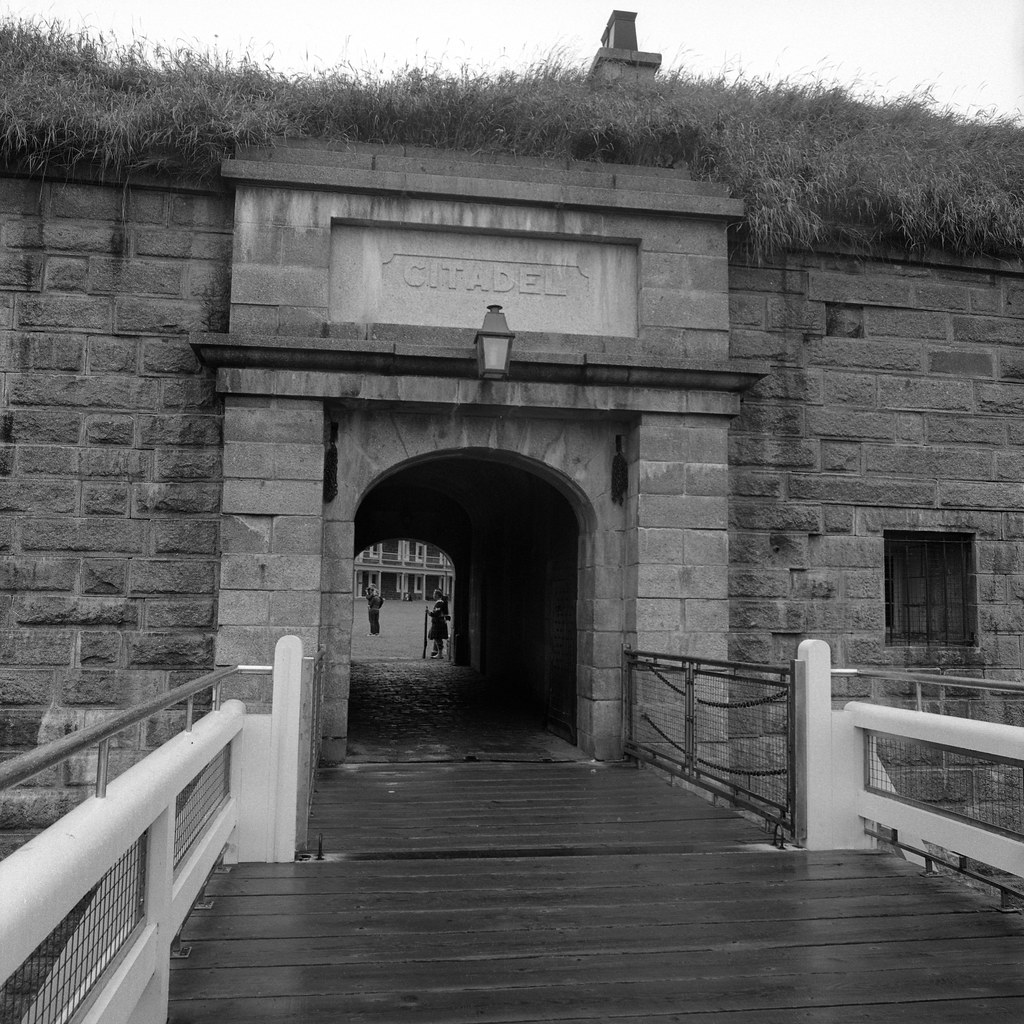
Halifax, it’s hard not to be reminded of the military past of Nova Scotia’s capital; look up from downtown, and you’ll see the massive hill that rises above the town. Or see the Royal Canadian Navy sailing in and out of the harbour. Or even see the old fortifications that dot the islands in the harbour, or see the old gun batteries along the shoreline. The saying goes that a strong defence is a potent offence, except in Halifax’s case, where a strong defence is just that, a defence. From the mid-18th century through to the middle of the 20th century, Halifax was a fortress, so much so that it was never directly attacked by land or by sea during those turbulent years.
Hasselblad 500c – Carl Zeiss Distagon 50mm 1:4 – Kodak Tri-X 400 @ ASA-400 – Kodak D-23 (Stock) 7:30 @ 20C
Let’s go back to 1749, what we know today as the Maritimes was heavily contested between France and England. The French had their stronghold at Louisbourg, which had recently been returned to them under the treaty that ended the War of the Austrian Succession after its capture by British forces from New England in 1745. So, to counterbalance the French presence in the Atlantic, Lord Edward Cornwallis established what we know today as Halifax. While the Royal Navy built its dockyard, Cornwallis constructed a simple redoubt at the top of the hill and continued to extend walls around the new city. Halifax would have a defensive ring of five forts, but the fort on the hill he named Fort George, after King George II. The British would also fortify George’s Island. This first citadel would continue to defend the city during those early colonial wars, including the Seven Years ‘ War/French-Indian War.
Hasselblad 500c – Carl Zeiss Distagon 50mm 1:4 – Kodak Tri-X 400 @ ASA-400 – Kodak D-23 (Stock) 7:30 @ 20C
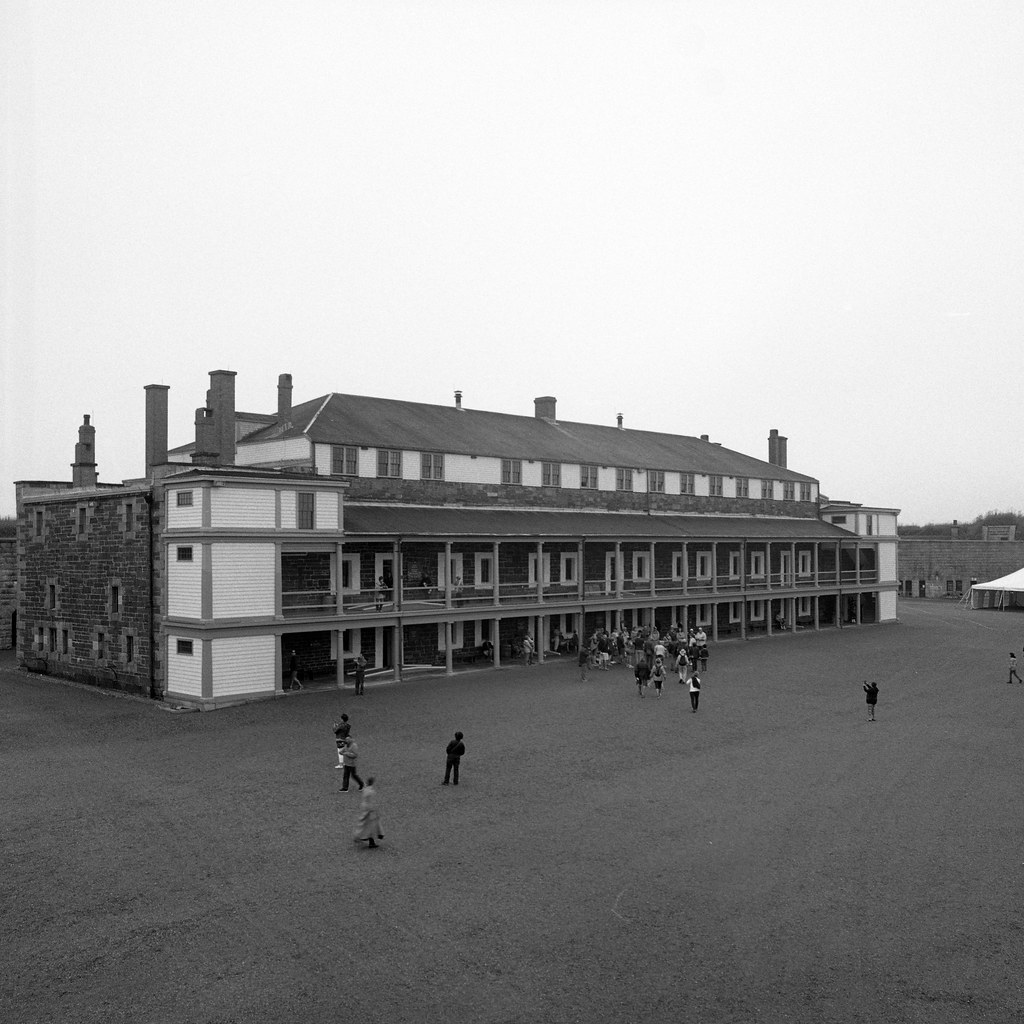
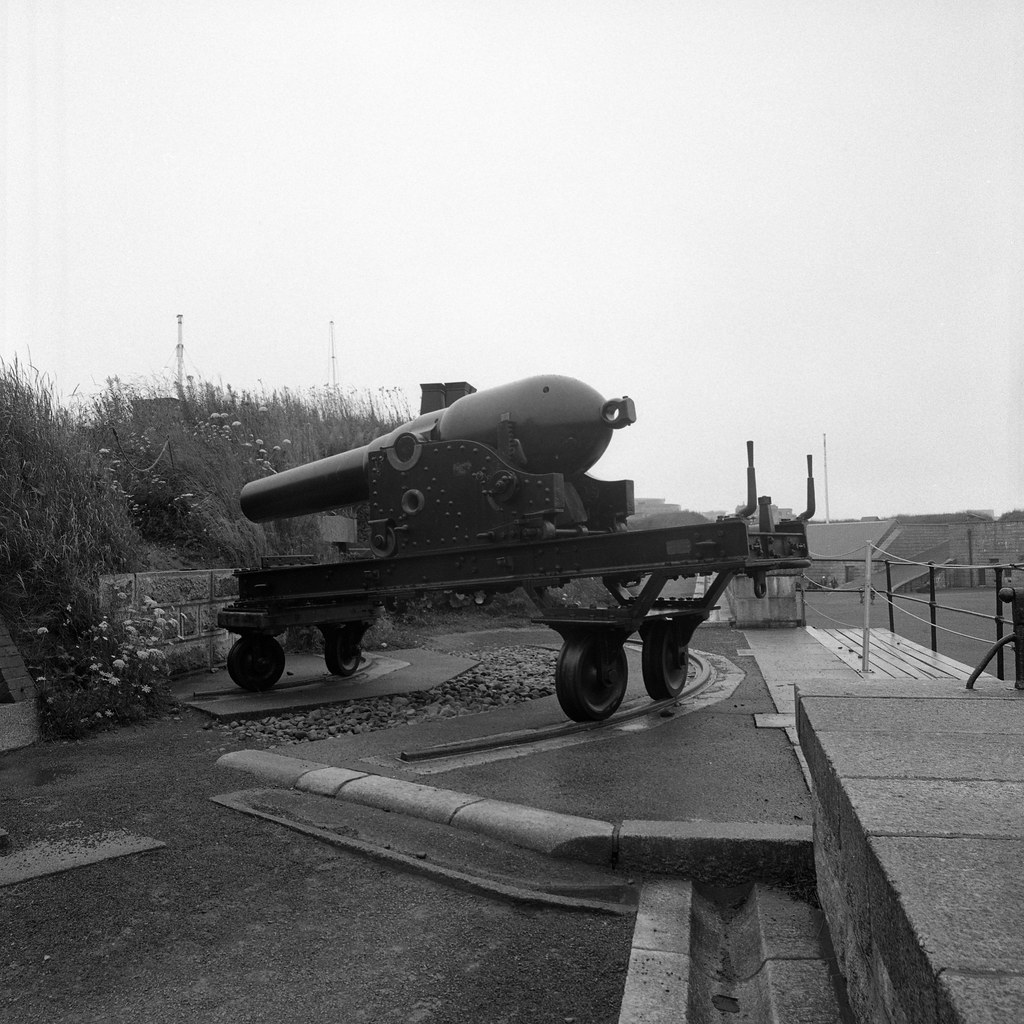
The defences at Halifax got a major upgrade during the American Revolution: trenches, redoubts, artillery batteries, and a massive octagonal blockhouse were constructed on Citadel Hill. By the time the second citadel was constructed in 1776, it had boasted a garrison of one hundred men and an artillery battery of 86 guns. But that was nothing compared to the ring of defences that now surrounded the city. Batteries had been set up on both sides of the harbour and on several islands. England did not want their navy to come under attack from the upstart revolutionaries from the thirteen colonies. Fortress Halifax would become known as the Warden of the North. And it worked; Halifax never came under attack by American or French forces during the war, and it remained loyal to the British Crown throughout the conflict. Even after the Treaty of Paris ended the American Revolution, the garrison remained on guard against American Privateers.
Hasselblad 500c – Carl Zeiss Distagon 50mm 1:4 – Kodak Tri-X 400 @ ASA-400 – Kodak D-23 (Stock) 7:30 @ 20C
By the end of the 18th century, the British faced a new threat: Revolutionary-era France. With a new conflict brewing, Fort George and Citadel Hill received the third upgrade. The old blockhouse was demolished, and the top of the hill was levelled off and lowered. A new fortress was constructed at the peak, and a new four-bastion star fort was built. A massive blockhouse and magazine were built inside earthwork walls. The French never again reached North America; it was only the Threat of the Anglo-American War of 1812 that prompted the completion of the citadel and the surrounding fortifications. The American government knew that to remove the British from North America would mean attacking Halifax. But it didn’t quite align with their plans, and the Royal Navy, along with the sheer size and scope of Halifax’s defences, kept the Americans at bay.
Hasselblad 500c – Carl Zeiss Distagon 50mm 1:4 – Kodak Tri-X 400 @ ASA-400 – Kodak D-23 (Stock) 7:30 @ 20C
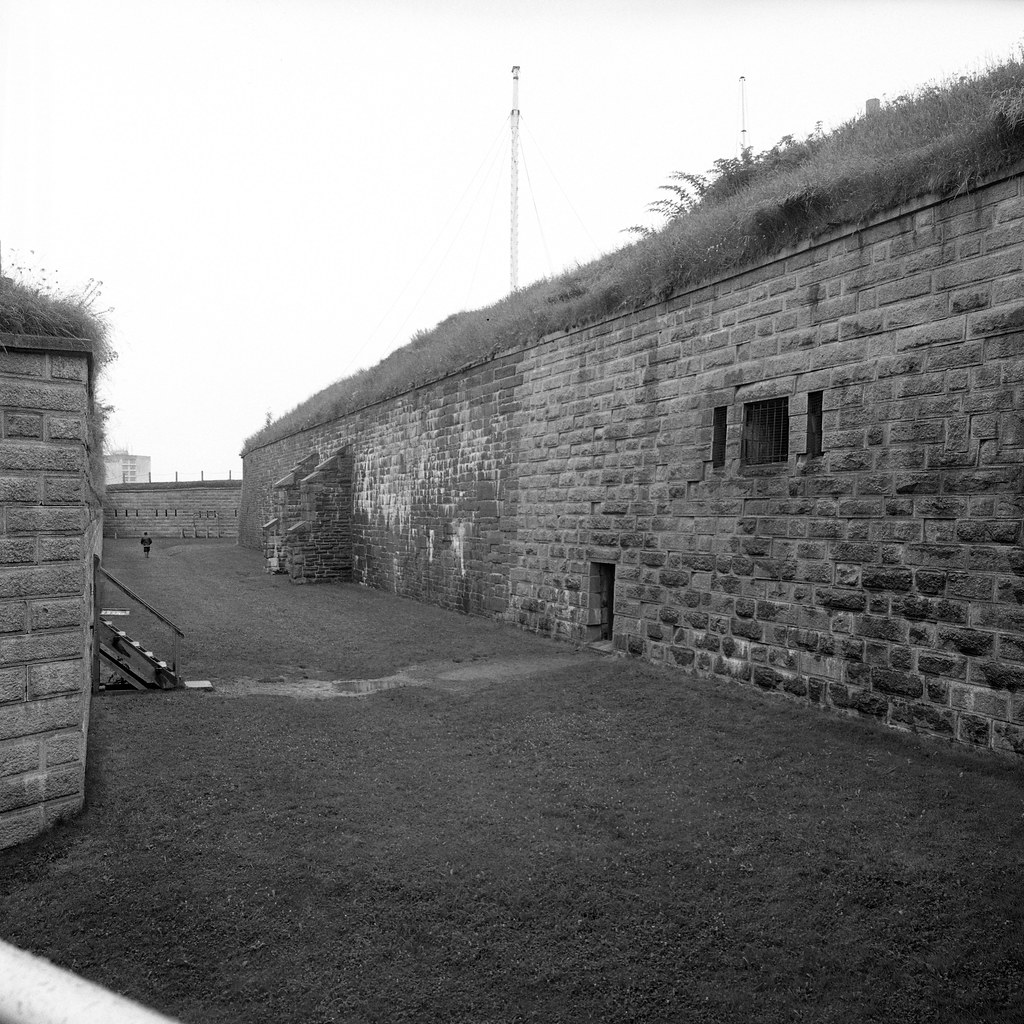
With the end of the American War, the British began to review their fortifications in British North America and quickly realised that they needed to improve them if they were to hold the land against any future American attacks. Construction of the fourth citadel began in 1828, using the outline of the third citadel, but many changes to the plans resulted in a 28-year construction period. The earthwork walls were replaced with limestone, and soon the citadel became the central point for the Halifax Defensive Complex. Anyone who even attempted to attack the city would face certain destruction against eleven forts, seven artillery batteries, and three Martello towers. The British Army and Royal Navy would continue to occupy the Halifax complex well after the creation of the Dominion of Canada in 1867, eventually turning it over to Canada in 1906.
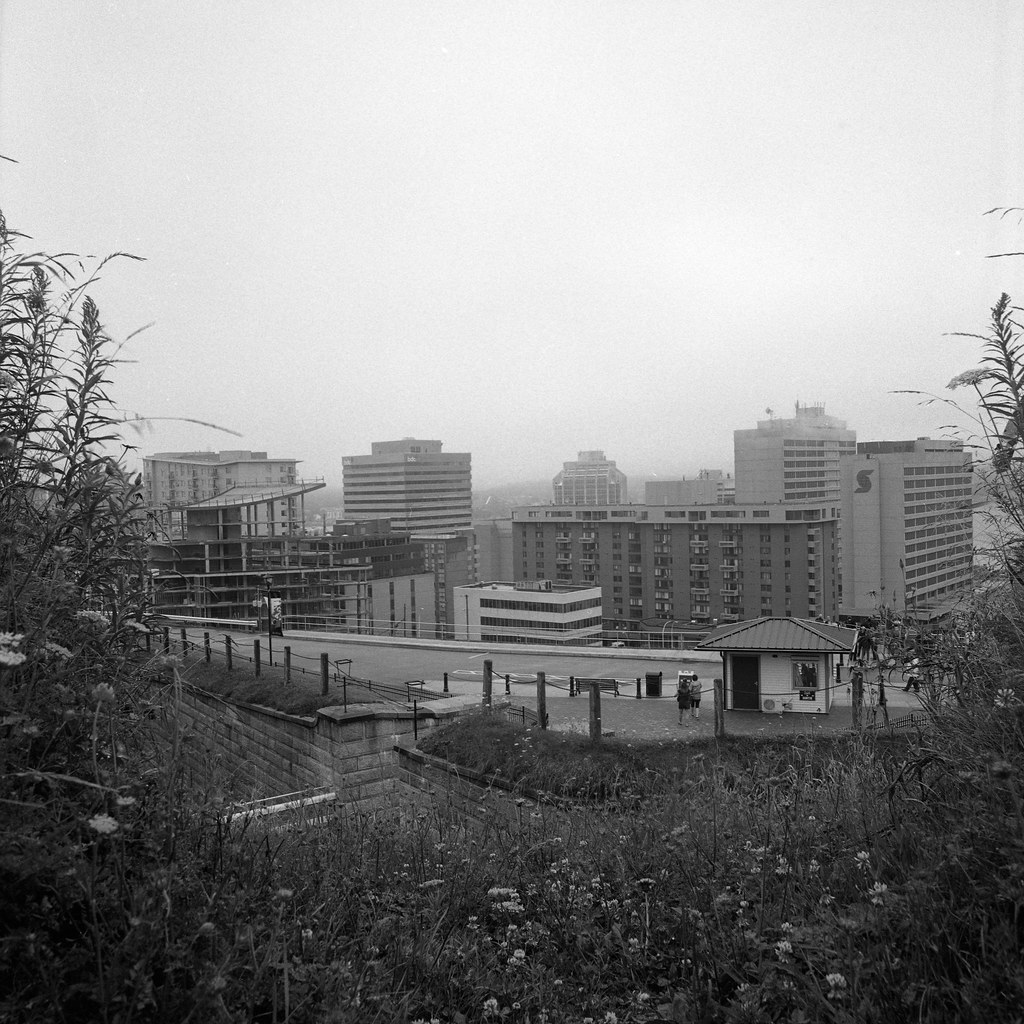
Hasselblad 500c – Carl Zeiss Distagon 50mm 1:4 – Kodak Tri-X 400 @ ASA-400 – Kodak D-23 (Stock) 7:30 @ 20C
With the advent of heavy rifled artillery, the Halifax Citadel was considered obsolete, but it continued to serve as headquarters for the entire defence complex throughout the First World War. During that conflict, the use of the citadel took a darker turn, serving as an internment camp for those whom the government had labelled as enemy aliens, mostly those of German descent. The final military use of the citadel was as a headquarters for coordinating anti-aircraft and anti-submarine defences.
Sony a6000 – Sony E PZ 16-50mm 1:3.5-5.6 OSS
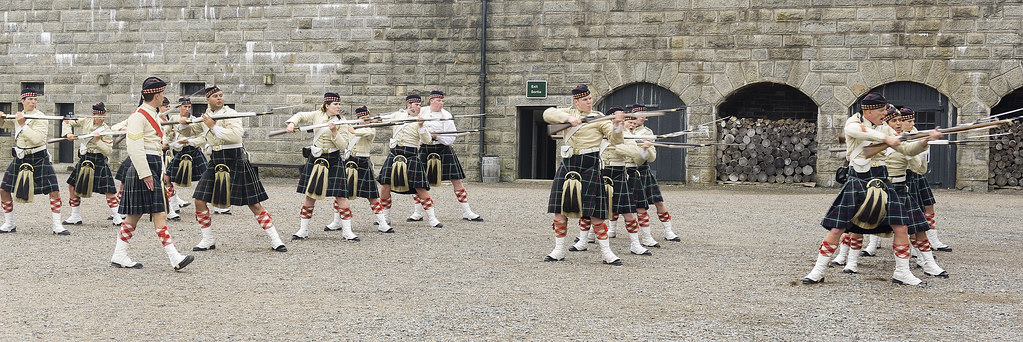
After the Second World War, the fort was essentially abandoned, and while it had received some restoration work in the 1930s, it was beginning to suffer decay. And like many 19th-century fortifications that had long since fallen out of use, it faced demolition for a parking lot. Thankfully, the city realised that a restored fort would offer both historical presence and tourism. By 1956, a partially restored fort and the Halifax Army museum opened to the public. The site is now the most visited historical site in all of Atlantic Canada. Not to mention, during the peak season, it is manned by some of the best staff I have ever seen and interacted with. The fort today is restored to what it would have been like in the mid-19th century, with men of the 78th Highlanders stationed at the post for three years, along with men of the Royal Artillery. The fort continues the tradition of firing the noon gun and 21-gun salutes. It is certainly worth a visit if you find yourself in Halifax.
Written with Files from:
Collins, Gilbert. Guidebook to the Historic Sites of the War of 1812. Toronto: Dundurn, 2006. Print.
web: www.pc.gc.ca/eng/lhn-nhs/ns/halifax/index.aspx
web: www.canadahistory.com/sections/places/forts/halifax_citadel.htm
Special Thanks to the men and women of the Halifax Citadel National Historic Site for answering all my questions and providing additional information for this article.