There’s something fun about getting into a new location and connecting with a trusted group who were more than happy to share the location. Of course, once it gets too well known, things can go downhill. And when something interesting turned up in Coburg, I knew I had to check it out. Suppose you were around when Sidbrook first started to get traction. In that case, you’ll immediately recognise it as the place with “that” bathtub.

Nikon D300 – AF-S Nikkor 14-24mm 1:2.8G
Harry Mason, a manager for the Coburg & Peterborough Railway (operations started in 1854, purchased by Grand Trunk in 1893 and ceased operations in 1898), purchased Lots 13 and 14 on Concession B in Coburg, Ontario, as the site for his summer estate. Mason contracted for the construction of a two-storey villa-styled home in 1857. Mason stayed on the property for over a decade when he sold the property to Major David Campbell in 1868. Major Campbell and his older brother had found a new life in Canada following their tenure in the army as land surveyors. The pair are the namesakes of the town of Campbellford, Ontario. Major Campbell contracted local architect Kivas Tulley to expand the original home, adding a second wing with a mansard roof. Campbell would give the name Sidbrook to the property and begin extensive landscaping across the massive estate. After the major died in 1881, his ward, Mary Jane Angell and her husband, John Gravelly, were bequeathed the estate. By the turn of the century, Coburg had become a popular spot for wealthy Americans to vacation in the summer. William Abbot (a partner of steel magnate Andrew Carnegie) and his wife, Anne Wainwright, purchased Sidbrook from Angell and Gravelly in 1900. The pair transformed Sidbrook into one of the many jewels along the lake in Coburg, adding three beaux-arts porticos, several balconies and a third floor. The interior was also renovated to add a ballroom and other rooms to accommodate lavish parties. The Abbots remained at Sidbrook until 1950 when it was sold to the Hans family, who sold the property to the Walkers in 1952.

Nikon D300 – AF-S Nikkor 14-24mm 1:2.8G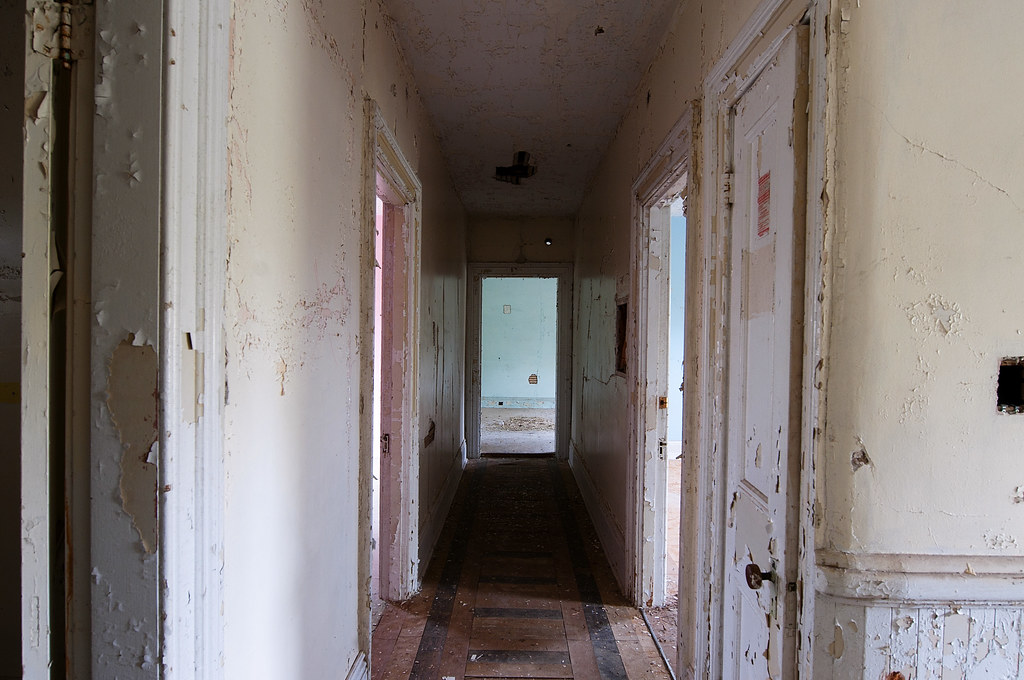
Nikon D300 – AF-S Nikkor 14-24mm 1:2.8G
Nikon D300 – AF-S Nikkor 14-24mm 1:2.8G
Nikon D300 – AF-S Nikkor 14-24mm 1:2.8G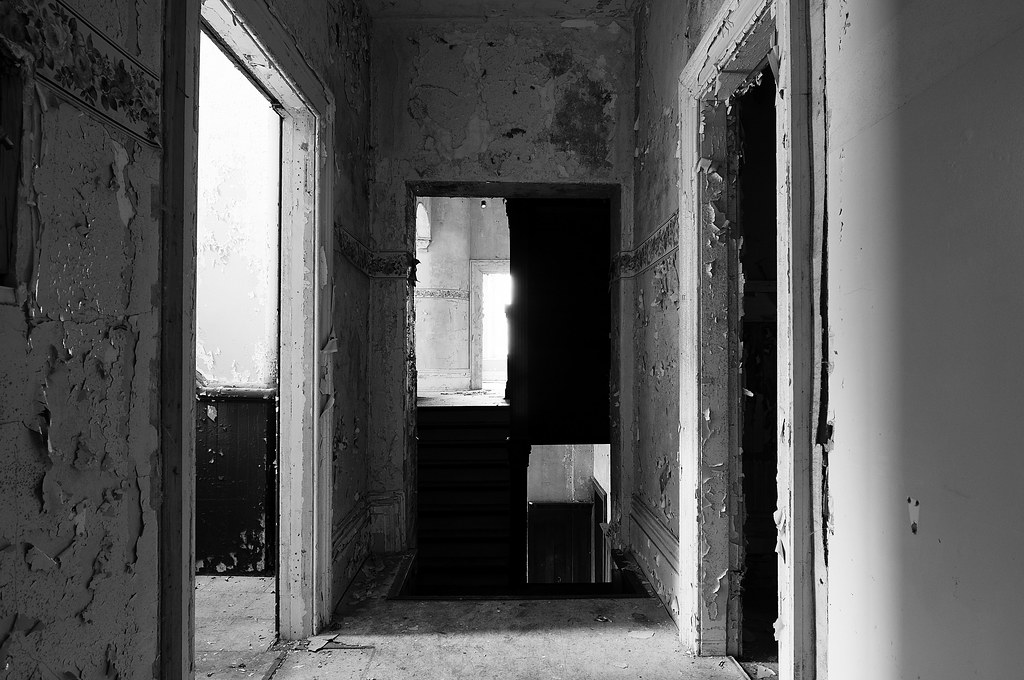
Nikon D300 – AF-S Nikkor 14-24mm 1:2.8G
The Walkers had no intention of living in the mansion; instead, they envisioned transforming most of the property into a private hospital. The interior elements were covered up, the tall ceilings were covered with modern drop tiles, and the woodwork was covered up with drywall. The Walkers also sold off portions of the thirty-acre estate, reducing the size to only three acres. Two of the three porticos were demolished, as were the balconies. The first-floor library became the administrative office, and the ballroom was partitioned into ten rooms. The Walkers would transform the third floor into their private apartment. The Sidbrook Private Hospital hosted fifty staff, a mix of medical and administrative persons, and supported up to thirty-eight patients. The hospital operated from the mid-1950s until 2002 the Walkers decided to retire. With no buyers to continue operations, the hospital shut down, and the remaining twenty-nine patients moved to other care homes. Locals quickly protected Sidbrook as one of the few surviving mansions of the area’s 20th-century grandeur. The process of granting the estate heritage status began but was countered by the new owners. When they failed to attend the hearing, the status was granted. The local government tried its best to help salvage the structure through the ever-shifting plans of the owner for the site, even accelerating rezoning petitions. However, by 2008, the site had remained abandoned, and the government had begun warning the owners. The owners completed some work, securing the property and stripping away the interior changes made to convert the site to a hospital. However, the extensive scale and damage to the house stopped the work, and the proposal was withdrawn. By 2013, the local government issued stronger warnings demanding that the site be secured and that a proper restoration be completed after an injured person entered the site (wasn’t me!). New owners took over the property in 2020 with plans to covert Sidbrook into a multi-unit condo development. Many in Coburg feel it may be too late to salvage the home.

Nikon D300 – AF-S Nikkor 14-24mm 1:2.8G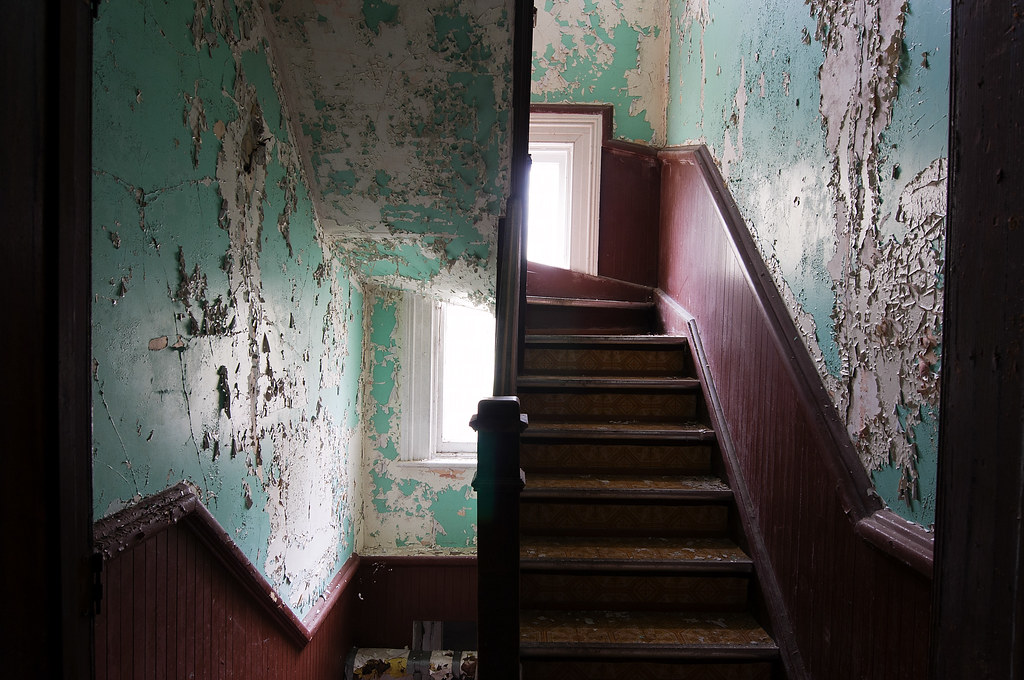
Nikon D300 – AF-S Nikkor 14-24mm 1:2.8G
Nikon D300 – AF-S Nikkor 14-24mm 1:2.8G
Nikon D300 – AF-S Nikkor 14-24mm 1:2.8G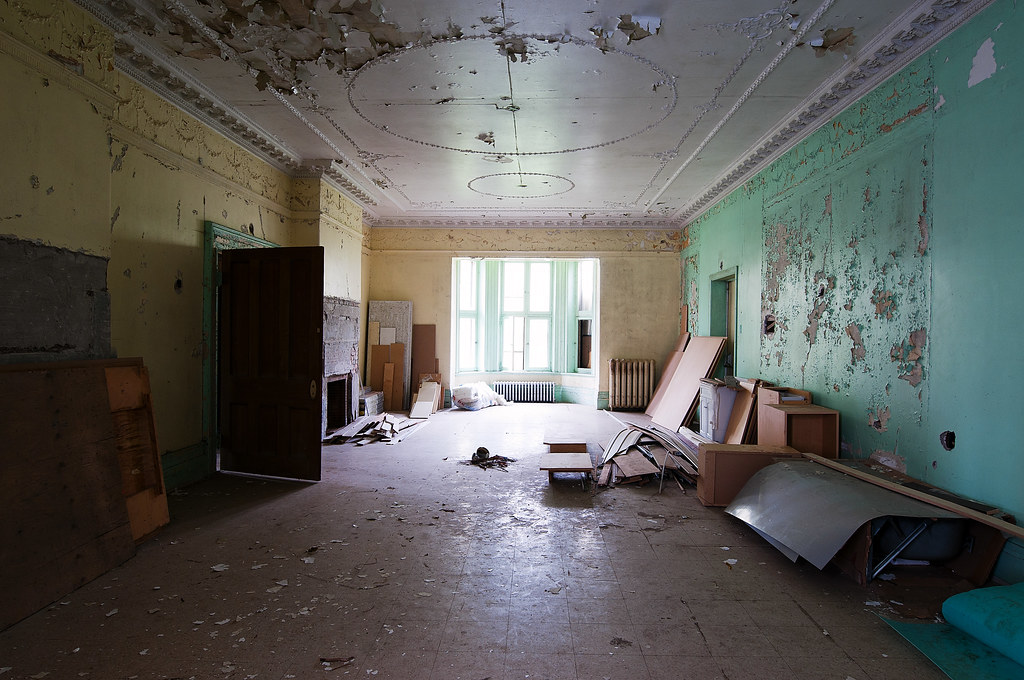
Nikon D300 – AF-S Nikkor 14-24mm 1:2.8G
It was not the best day when I went on my single visit to Sidbrook; I remember that part clearly, which was dull, musty, and a bit rainy. But that did not stop me from taking off to the other side of Toronto. I also remember stopping by downtown Coburg on my way to Sidbrook and finding a small model shop. There, I picked up a set of three figures from the 95th Regiment of Foot, which are now a common sight on this blog in the lens reviews. Sidbrook lay on the east side of town, set back among homes built in the post-war era. This was a solo trip, which I was glad about, and I also had information about how to get inside. What I did not count on was how easy that access was. I parked a few blocks east of Sidbrook and walked onto the property. No need to sneak in around back that could have attracted more attention from the neighbours. It was also easy because a single person does not often attract as much attention as a group. I did not see another person on my way to the property who could have alerted the local police. This trip was also in 2011, so before the additional security had gone up and the one person had to be rescued, the place’s heat was not yet on too high. Once there, I got to work, getting in a series of digital images and a roll of Tri-X through the Rolleiflex. I must admit, I saw the entire place without any real problems. Again, being solo certainly helped with getting clean images. I can’t recall if I did a self-portrait in the tub, but I probably did, and I should dig into my back catalog to see if I did. I was inside for a good couple of hours before the rain started to fall harder, and I got out before it got worse. A good, super-clean exploration, and while this was a single-visit site, I’m happy because things started to get a bit harder in the next couple of years.

Rolleiflex 2.8F – Carl Zeiss Planar 80mm 1:2.8 – Kodak Tri-X 400 @ ASA-400 – Ilford ID11 (Stock) 8:00 @ 20C
Rolleiflex 2.8F – Carl Zeiss Planar 80mm 1:2.8 – Kodak Tri-X 400 @ ASA-400 – Ilford ID11 (Stock) 8:00 @ 20C
Rolleiflex 2.8F – Carl Zeiss Planar 80mm 1:2.8 – Kodak Tri-X 400 @ ASA-400 – Ilford ID11 (Stock) 8:00 @ 20C
Rolleiflex 2.8F – Carl Zeiss Planar 80mm 1:2.8 – Kodak Tri-X 400 @ ASA-400 – Ilford ID11 (Stock) 8:00 @ 20C
Rolleiflex 2.8F – Carl Zeiss Planar 80mm 1:2.8 – Kodak Tri-X 400 @ ASA-400 – Ilford ID11 (Stock) 8:00 @ 20C
I like my work at Sidbrook; while I didn’t get a lot of images here, I’m happy with the results. And I’m glad I got in when I did so. Most of the modifications made during the conversion were cleared out. I could clearly see that my composition style was already coming together. Lots of leading lines, flat images and some framing work. The one thing I’m happy about is that it was a solo trip because if more people were milling about it, it might have made photography much harder. One thing that also stands out is my use of the Rolleiflex and Kodak Tri-X 400, but what’s interesting is that I developed these myself using Ilford ID-11 a year before I started doing it on the regular, and only the third roll of film that I had developed myself to that point. I should also note that these negatives were among the second group I printed in the darkroom a few years later.

Rolleiflex 2.8F – Carl Zeiss Planar 80mm 1:2.8 – Kodak Tri-X 400 @ ASA-400 – Ilford ID11 (Stock) 8:00 @ 20C
Rolleiflex 2.8F – Carl Zeiss Planar 80mm 1:2.8 – Kodak Tri-X 400 @ ASA-400 – Ilford ID11 (Stock) 8:00 @ 20C
Rolleiflex 2.8F – Carl Zeiss Planar 80mm 1:2.8 – Kodak Tri-X 400 @ ASA-400 – Ilford ID11 (Stock) 8:00 @ 20C
Rolleiflex 2.8F – Carl Zeiss Planar 80mm 1:2.8 – Kodak Tri-X 400 @ ASA-400 – Ilford ID11 (Stock) 8:00 @ 20C
Rolleiflex 2.8F – Carl Zeiss Planar 80mm 1:2.8 – Kodak Tri-X 400 @ ASA-400 – Ilford ID11 (Stock) 8:00 @ 20C
Sidbrook is one of those locations still hanging on in its abandoned state. Many of the spaces I have written about have either been demolished or found new life; others remain in limbo. The one thing that stands out is the location’s rich history, which I hope can be preserved somehow. However, if what I have read online is true, that may not be possible now. Sidbrook may be nothing more than a memory. I am happy that some of my images can be a part of the visual history of Sidbook during the in-between times. If you want to check out the rest of my photos you can see them over on Flickr.