You cannot save everything; it’s something that I struggle with, although I’ll try hard to save as much as I can. And the same can be said about our built history. But what if we could save some things, as much as possible? Canada is a relatively young country in the grand scheme of things, but our history stretches back to before Confederation in 1867. And while we have saved a lot of our built history, we have also lost far more. The post-war urban renewal saw many cities and some smaller urban centres tear down historic buildings to build up the modern future. Although through this there was a lot of local pushback. Many local historical societies were founded to save these historic buildings. In my hometown of Milton, the local historical society was formed to save the former county courthouse after the demolition of the Bruce Street School. At a higher level, the Ontario Government passed the Ontario Heritage Act in 1975, which allows the government to designate buildings and districts as historically significant and to preserve them from demolition. Now it is impossible to save every building where they stand, but what if you could move them and preserve them in a museum dedicated for just that?

Nikon D750 – AF Nikkor 28mm 1:2.8
Nikon FE2 – AI-S Nikkor 35mm 1:2.8 – Jessops Pan 100s @ ASA-100 – Kodak HC-110 (1+79) 15:45 @ 20C (Constant Rotation)
Nikon D750 – AF Nikkor 28mm 1:2.8
Nikon FE2 – AI-S Nikkor 35mm 1:2.8 – Jessops Pan 100s @ ASA-100 – Kodak HC-110 (1+79) 15:45 @ 20C (Constant Rotation)
Nikon D750 – AF Nikkor 28mm 1:2.8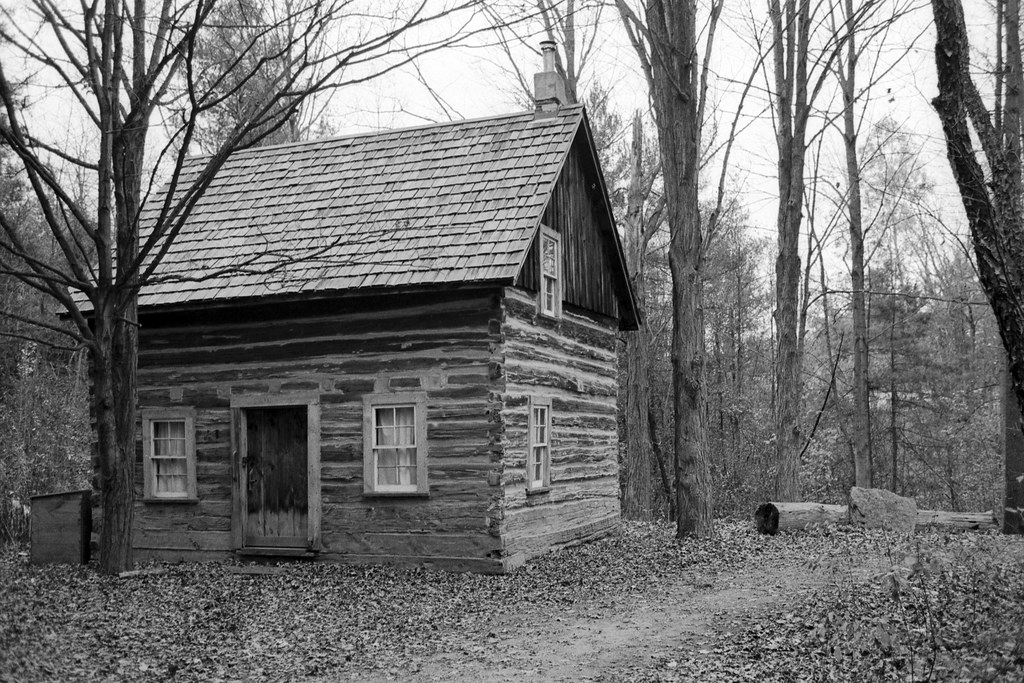
Nikon FE2 – AI-S Nikkor 35mm 1:2.8 – Jessops Pan 100s @ ASA-100 – Kodak HC-110 (1+79) 15:45 @ 20C (Constant Rotation)
There are a lot of these museums in Ontario, and many specifically in my part of Ontario and beyond. I couldn’t tell you how many there are in Ontario, let alone across North America. Now I’m not talking about sites that feature a single historic site, historic forts, Fortress Louisbourg, and more. These are museums that feature historic buildings, either as a collection of buildings or arranged in a way that might have been an actual town in the past. Call them what you like: Pioneer Village, Heritage Village, Heritage Centre or some combination of all of these. These days, the term “Pioneer” is being dropped. In some cases, the site is based around a few historic buildings that were already there (The Village at Black Creek), with additional buildings added to the property. In others, the buildings were moved to an acquired property. In many cases, these museums are animated by employees and volunteers who are dressed in period garb and share what life was like back then. In some cases, the buildings are generally from the same period, while others span a wide range of years.

Nikon D750 – AF Nikkor 28mm 1:2.8
Nikon FE2 – AI-S Nikkor 35mm 1:2.8 – Jessops Pan 100s @ ASA-100 – Kodak HC-110 (1+79) 15:45 @ 20C (Constant Rotation)
Nikon D750 – AF Nikkor 28mm 1:2.8
Nikon FE2 – AI-S Nikkor 35mm 1:2.8 – Jessops Pan 100s @ ASA-100 – Kodak HC-110 (1+79) 15:45 @ 20C (Constant Rotation)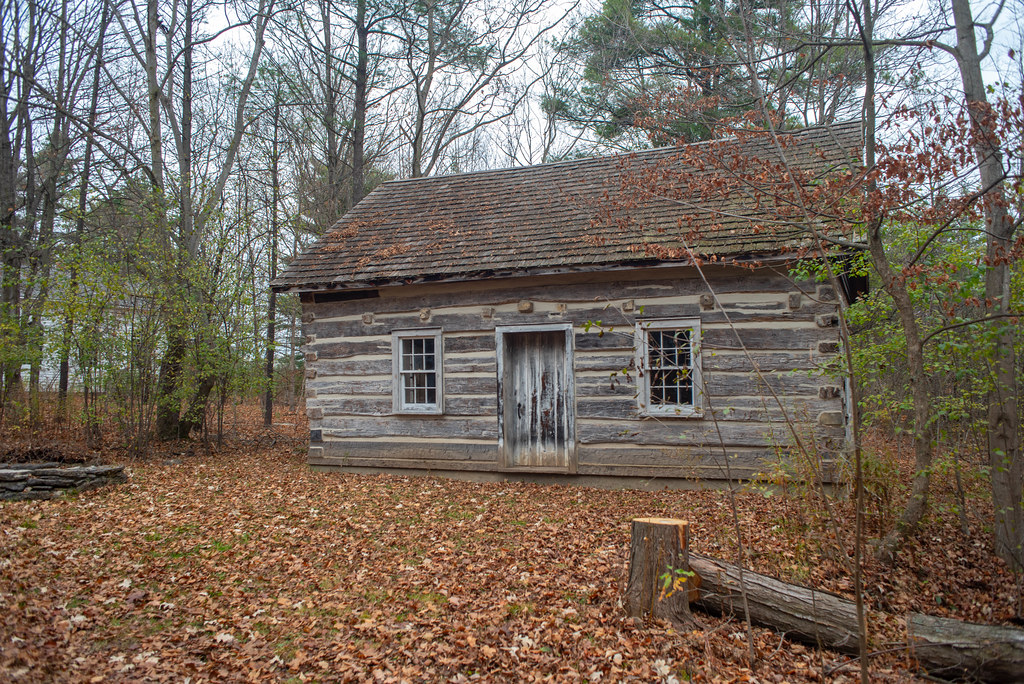
Nikon D750 – AF Nikkor 28mm 1:2.8
Nikon FE2 – AI-S Nikkor 35mm 1:2.8 – Jessops Pan 100s @ ASA-100 – Kodak HC-110 (1+79) 15:45 @ 20C (Constant Rotation)
I enjoy visiting these museums and have had a chance to visit several of them; I haven’t visited others. Usually due to time and distance. But that doesn’t mean I don’t have any to visit in my part of Ontario. There are two: the one closest is Westfield Heritage Centre, and the other is The Village at Black Creek (Formerly Black Creek Pioneer Village). I have written a lot about Westfield in the past, how the site has grown and changed since it first opened in 1964, so I won’t bother you with those details. You can check that out in different posts here on the blog. The one thing I like best about Westfield is that, since the pandemic, it has normal operating hours but isn’t always fully animated. That means that during the week, the gate is self-service, the buildings are closed, and on-site staff is limited. You can wander the site without worrying about crowds, making it quiet and contemplative. It isn’t without detail; signs and QR codes let you learn about the various buildings on the site. And Westfield has a wide range, everything from the 1790s up to the early 20th century.

Nikon D750 – AF Nikkor 28mm 1:2.8
Nikon FE2 – AI-S Nikkor 35mm 1:2.8 – Jessops Pan 100s @ ASA-100 – Kodak HC-110 (1+79) 15:45 @ 20C (Constant Rotation)
Nikon D750 – AF Nikkor 28mm 1:2.8
Nikon FE2 – AI-S Nikkor 35mm 1:2.8 – Jessops Pan 100s @ ASA-100 – Kodak HC-110 (1+79) 15:45 @ 20C (Constant Rotation)
Nikon D750 – AF Nikkor 28mm 1:2.8
Nikon FE2 – AI-S Nikkor 35mm 1:2.8 – Jessops Pan 100s @ ASA-100 – Kodak HC-110 (1+79) 15:45 @ 20C (Constant Rotation)
While Westfield is a local and a favourite, there are many others in Ontario that are excellent. There is the aforementioned Village at Black Creek, located in Toronto and based around a historic farm and farmhouses, which is one of the most cohesive living history museums. It almost feels like it is a historic town turned into a museum. Another one that offers up a much more sprawling experience is Upper Canada Village in Morrisburg. I even had a chance to photograph a wedding at Kawartha Settler’s Village in Bobcaygon, where the buildings were the backdrop rather than the subject. But then there are others that I haven’t had the chance to visit properly. Doon Heritage Village in Kitchener, which I have visited, just not properly, but enough to grab a single frame of the old Petersburg GTR station. Then there are ones I haven’t visited at all but do have on my list. These include Fanshaw in London and Lang outside of Peterborough. Plus going further east, including the Lost Villages in South Stormont and Glengarry Museum in North Glengarry.
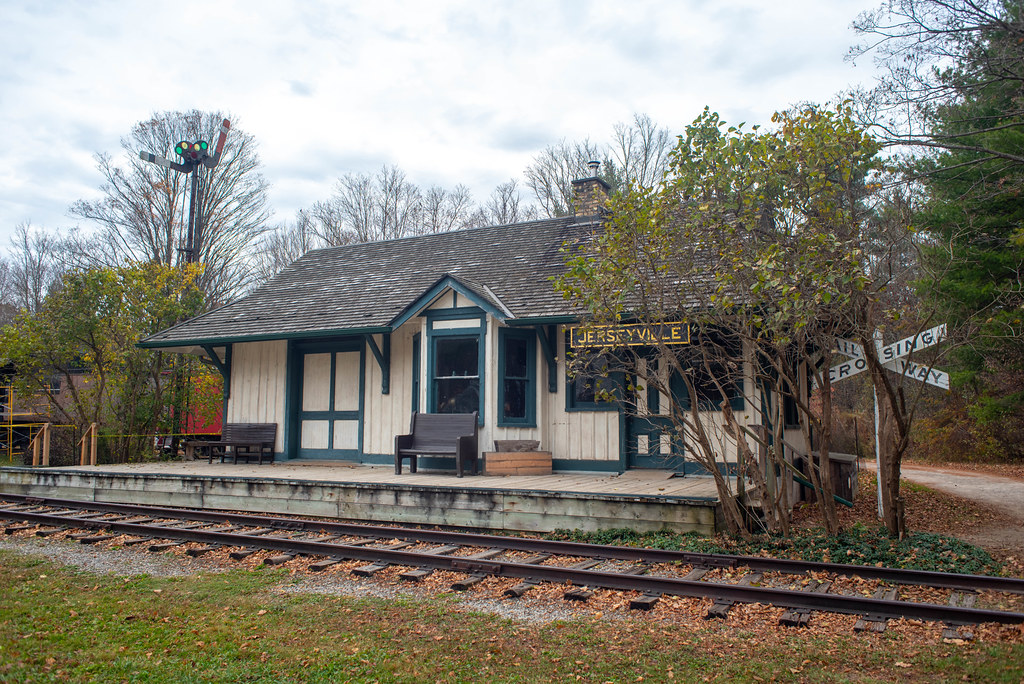
Nikon D750 – AF Nikkor 28mm 1:2.8
Nikon FE2 – AI-S Nikkor 35mm 1:2.8 – Jessops Pan 100s @ ASA-100 – Kodak HC-110 (1+79) 15:45 @ 20C (Constant Rotation)
Nikon D750 – AF Nikkor 28mm 1:2.8
Nikon FE2 – AI-S Nikkor 35mm 1:2.8 – Jessops Pan 100s @ ASA-100 – Kodak HC-110 (1+79) 15:45 @ 20C (Constant Rotation)
Nikon D750 – AF Nikkor 28mm 1:2.8
Nikon FE2 – AI-S Nikkor 35mm 1:2.8 – Jessops Pan 100s @ ASA-100 – Kodak HC-110 (1+79) 15:45 @ 20C (Constant Rotation)
These are only scratching the surface, and I’m sure there are more across Ontario, Canada, and North America as a whole. I don’t know if these even exist outside North America, mostly because once you go to Europe, Asia, or Africa, you are literally living in history. Everything is old, and everything is still being used. But locally, these allow you to travel back in time without needing a Police Box or a DeLorean. If you haven’t visited any of these museums before, I encourage you to go when there are staff present who can talk to you about the site and answer your questions. All the photos in this post are from a solo trip to Westfield in November. The cameras used are my Nikon D750 with the 28mm lens and the Nikon FE2 with the 35mm lens and a roll of Jessops Pan 100s which I developed in Kodak HC-110. You can check out all my photos from that trip over on Flickr. And make sure that if this interests you, find your local museum and visit it before winter.