The small fur trading post of Prairie du Chien was founded long before the British or Americans came to the old Northwest. But rather, the post was founded by the French in 1685 and soon became a small post along the Mississippi trade route. Even after the British gained the territory at the end of the French-Indian War (Seven Years’ War) in 1763, the population remained French. Loyalties shifted to the British and remained so even after the Treaty of Paris ceded the territory to the newly formed United States of America.
Hasselblad 500c – Carl Zeiss Planar 80mm 1:2.8 – Ilford FP4+ @ ASA-100 – Photographer’s Formulary Developer 23 (stock) 6:00 @ 20C
The first effort to fortify the town took place in 1814 when an expedition led by Governor William Clark (of Lewis & Clark Fame) established an American garrison in the small community. Governor Clark feared that the British might choose to enforce their influence in the community, then march on St. Louis with nothing to stop them. While the community did nothing to resist the Americans, they were unhappy with the new garrison and alerted the nearest British outpost, Mackinac Island, to it. Clark’s fort, named after Isaac Shelby, governor of his native territory of Kentucky, consisted of a warehouse annexed from the Mackinac Trading Company, two blockhouses, and the northwest and southwest corners, all surrounded by a wooden palisade. The American garrison, under the command of Lieutenant Joseph Perkins of the 24th Regiment, was short-lived in the fort. An expedition of militia and native troops dislodged the Americans after a three-day siege. The British were quick to rename the post after their commander, William McKay. For the rest of the War of 1812, the British remained watchful over Prairie du Chien from Fort McKay. The Americans would try twice to retake the post. Both efforts would fail far from the post. When word of peace reached the fort and the terms of that peace, the garrison was in shock. Everything was to return to how it was before the war. So the garrison followed the order to the letter, burned Fort McKay to the ground, and marched out. The American army was quick to re-establish an outpost mirroring the original fort, but this time naming it Fort Crawford in 1816. The garrison would serve the local population, keeping the peace and enforcing trade regulations. It also served as the site for the signing of the Treaty of Prairie du Chien, which would establish boundaries between the tribal lands of the local natives. The fort was evacuated and abandoned in 1826 after the Mississippi River overflowed its banks. Two murders would see the army return to prevent the violence from turning into a full-blown conflict. And while it didn’t happen, it was decided that the army would stay.
Hasselblad 500c – Carl Zeiss Planar 80mm 1:2.8 – Ilford FP4+ @ ASA-100 – Photographer’s Formulary Developer 23 (stock) 6:00 @ 20C
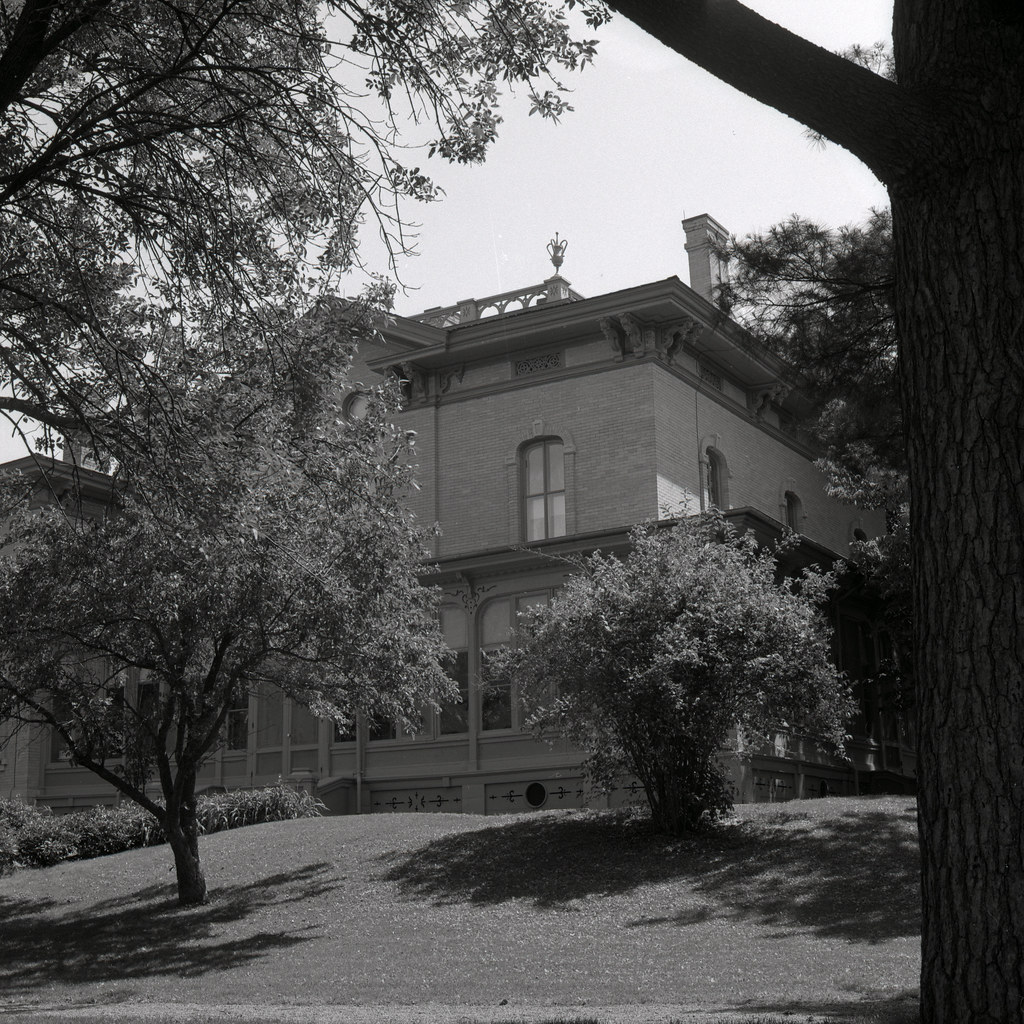
The trouble was that due to the location of the old fort. The flood had done serious damage to the work. There was additional flood danger, not to mention a cesspool where diseases would flourish among the garrison. But the garrison would have to remain there while a new fort was built to the south of the town on the mainland under the watchful eye of Colonel Zachary Taylor, future President of the United States and Lieutenant Jefferson Davis, future President of the Confederate States of America. The garrison at the old fort was in good hands. Dr William Beaumont was in charge of keeping the men in good health and took the opportunity to conduct research on the human digestive system. The knowledge he gained formed the basis of our modern understanding of the system; much of his work was conducted at the old Fort Crawford. The old fort was finally abandoned in 1832 when the garrison moved into their new stone barracks. The site would sit empty for a decade or so before being purchased by Hercules Louis Dousman. Hercules was a business owner and the son of Michael Dousman, the man who helped keep the population of Mackinac Island safe during the British capture in the opening action of the War of 1812. Hercules would begin to establish a family estate on the site in the mid-1840s. The site would be passed along to his son, H. Louis Dousman, and his widow after his death in 1868. Under the junior Dousman, an Italian-style villa was constructed on the property and occupied by his mother until her death in 1882. The Dousman family would continue to occupy the home, known as Villa Louis, until 1913. The villa was restored and turned into a museum in 1930s thanks largely to the efforts of Hercules’ granddaughters, Victoria Dousman Bigelow, and Violet Dousman Young. The site was taken over by the state’s historical society in 1950.
Hasselblad 500c – Carl Zeiss Planar 80mm 1:2.8 – Ilford FP4+ @ ASA-100 – Photographer’s Formulary Developer 23 (stock) 6:00 @ 20C
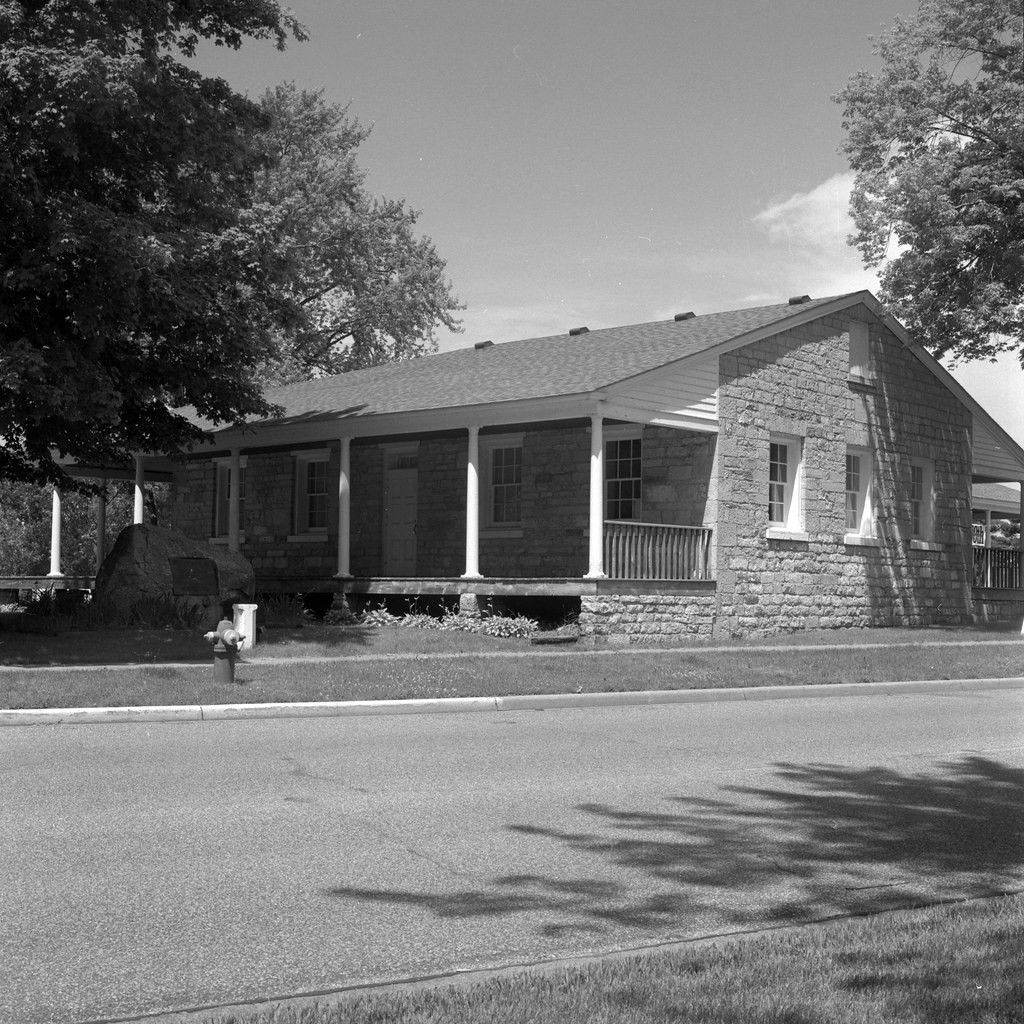
The new Fort Crawford on the mainland would continue to watch over the area through the mid-19th century. The garrison would participate in the Black Hawk War, and the titular Chief Black Hawk would surrender and become a prisoner of Fort Crawford. With the forced relocation of the area tribes to Iowa, the garrison would again be part of it. The need for the post decreased with the last troops’ departure in 1856. When the American Civil War began, the fort was used as a recruit depot and training station. It was also selected as a site for a US Army General Hospital. The Swift Hospital opened in 1864 and served close to 1,500 Union troops during its single year of operation. With the hospital’s closure in 1865, the fort would never see military service again. The land was sold off in parcels, and the buildings were either sold as homes or torn down for building materials. The Swift Hospital building was turned into a Roman Catholic private girls’ school. When the twentieth century dawned, all that remained were the ruins of the fort’s old hospital. The local chapter of the Daughters of the American Revolution started a fundraising campaign to purchase the ruins and the three-and-a-half parcels of land it sat on, and in 1925, they had raised all the needed funds. The old hospital was restored and rebuilt, and in 1960, it opened as a museum dedicated to Dr Beaumont’s efforts and the fort’s history.
Hasselblad 500c – Carl Zeiss Planar 80mm 1:2.8 – Ilford FP4+ @ ASA-100 – Photographer’s Formulary Developer 23 (stock) 6:00 @ 20C
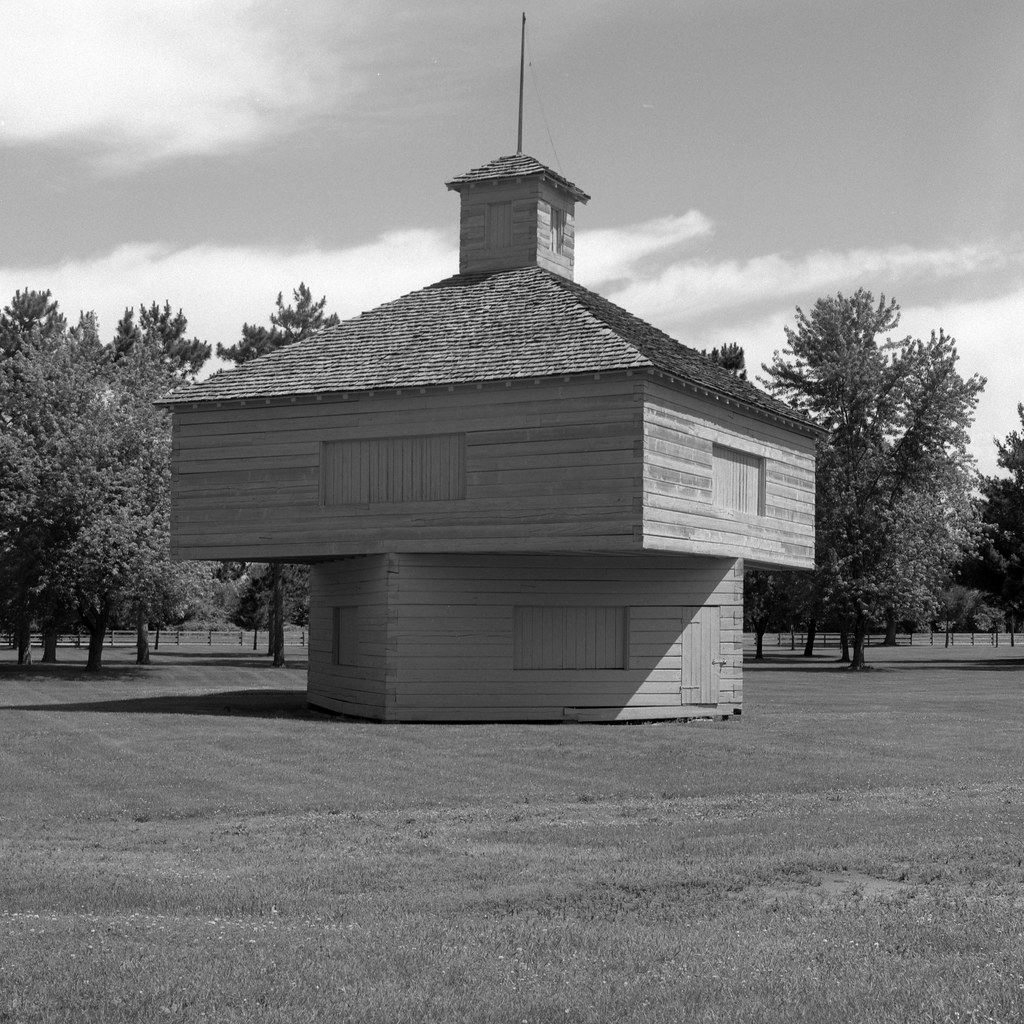
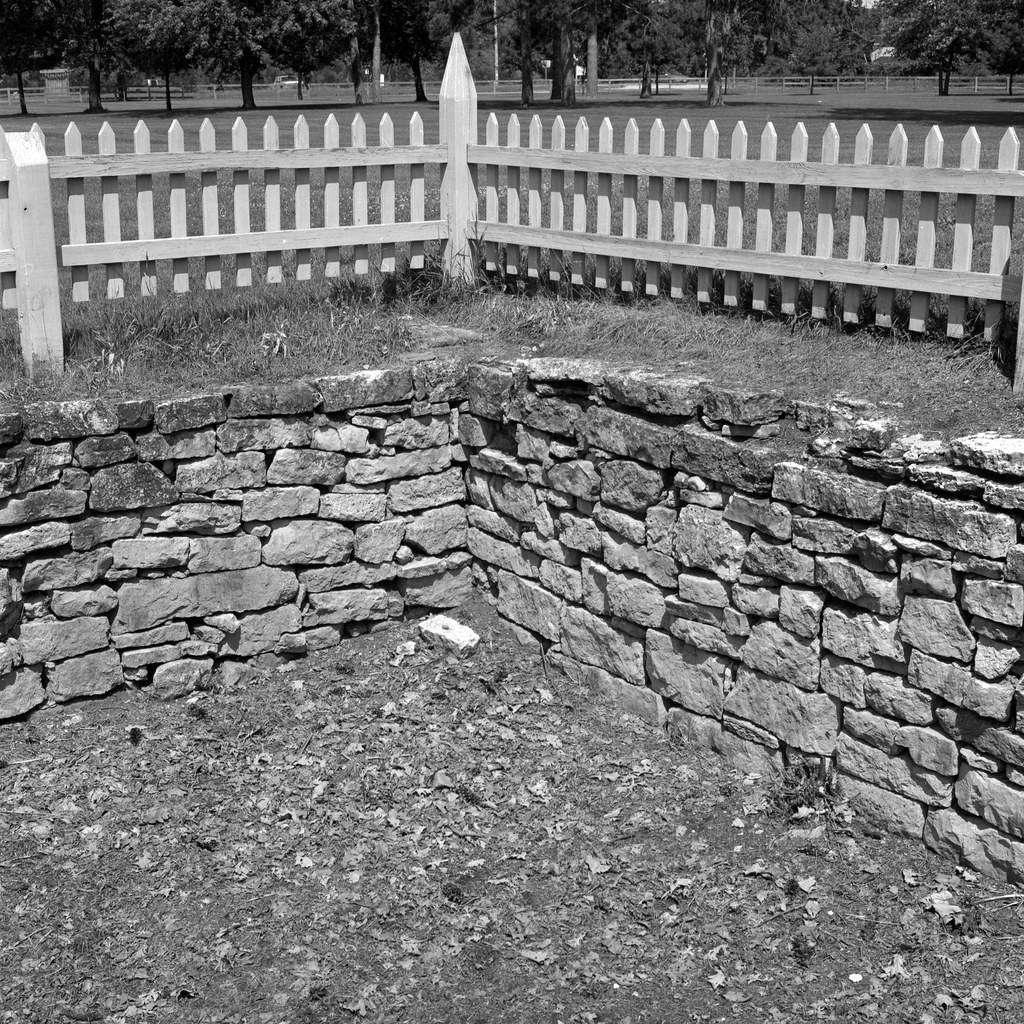
Today you can visit both sites. Historic Villa Louis features the 1868 Italian villa, and visitors can see a restored Blockhouse similar to those that once stood over Fort Shelby/McKay/Crawford, as well as ruins and footings discovered during the site’s restoration. The Fort Crawford Museum was transferred to the City of Prairie du Chien in 1996 and has since expanded to include all local history, as well as the original exhibits about the fort and the work of Dr Beaumont. The Swift Hospital building has long since been demolished in its place is a prison.
For more details on visiting these history sites, please check out their websites:
Fort Crawford Museum: www.fortcrawfordmuseum.com
Historic Villa Louis: villalouis.wisconsinhistory.org
Written with files from:
Ferguson, Gillum. Illinois in the War of 1812. Champaign, IL.: University of Illinois Press, 2012. Print.
Collins, Gilbert. Guidebook to the Historic Sites of the War of 1812. Toronto: Dundurn, 2006. Print.
Web: villalouis.wisconsinhistory.org/About/History.aspx
Web: www.fortcrawfordmuseum.com