There’s something so unique about looking back on a trip and thinking, “I was in a place where history was being made.” Remember, not all history is good history, but it was history all the same. Ten years ago, I visited a city I had wanted to visit for some time, but it had always slipped through my fingers. But in 2016 I finally decided to take some time and visit Washington, DC. It was the final place I needed to photograph and visit to complete my massive War of 1812 project, which, at that point, had been going on longer than the war itself, and with my wedding coming, I wanted to wrap up the loose ends. Of course, we all know what was going on in 2016 and would eventually happen a month later. I find the image of the bus compelling, as it said the series finale; after 240 years, let’s see how it all ends. The funny thing is, I didn’t realise it would be a two-parter.

Sony a6000 – Sony E PZ 16-50mm 1:3.5-5.6 OSS
Washington is a far drive, but not as far as one might think. Thankfully, I was not afraid of getting up and getting out at stupid o’clock, although it was not as bad as my trip to Texas in 2014. I wanted to get the majority of the drive out of the way first and stop for lunch. I also like to stop along the way at something interesting to take a break and stretch my legs. So after getting up and on the road, I crossed the border at Buffalo and headed into Pennsylvania. Of course, I did stop along the way: rest areas, gas, coffee and scenic overlooks. Plenty of those on the Interstate system. My first stop was in Hershey, PA. I had promised my wife (then fiancée) that I would get her some chocolate right from the source. And then found a brewery to hit up for lunch. After that, it was another couple of hours on the road to my next stop, Brookeville, MD. As I mentioned, my goal on the trip was to capture images for my War of 1812 project, and Brookeville was the town President Madison had fled to in the aftermath of the Battle of Bladensburg and the destruction of Washington by British troops. My goal was to photograph the house Madison holed up in, which still stands today. I got into town knowing the name of the house but not the location. I parked and asked a random person on the street. And my luck was with me as the person was the owner. They led me to the house and were more than happy to let me take my 4×5 shot, which I sadly jostled the tripod (stupid), but the sheet turned out good enough. Then the pair chatted with me about my project and the house’s history. I wish I could have stuck around and photographed the town a bit more, as there is a ton of historical buildings and homes. But I was so close to my goal that I had to leave. And I’m glad I did because if I had stayed later, I would have hit even worse traffic getting into Washington. Thankfully, I was not staying in Washington but rather in Maryland. I finally made it to my hotel and settled in after getting dinner at Applebee’s and enjoyed some beer and American TV. USA Network does these endless marathons of series, usually Law & Order: SVU.
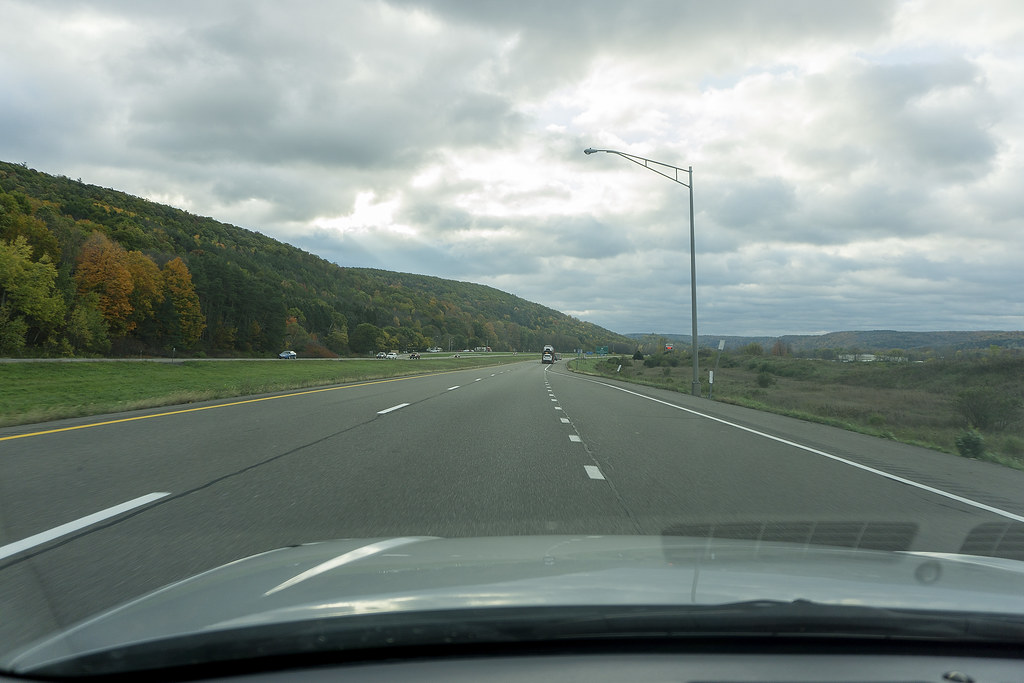
Sony a6000 – Sony E PZ 16-50mm 1:3.5-5.6 OSS
Sony a6000 – Sony E PZ 16-50mm 1:3.5-5.6 OSS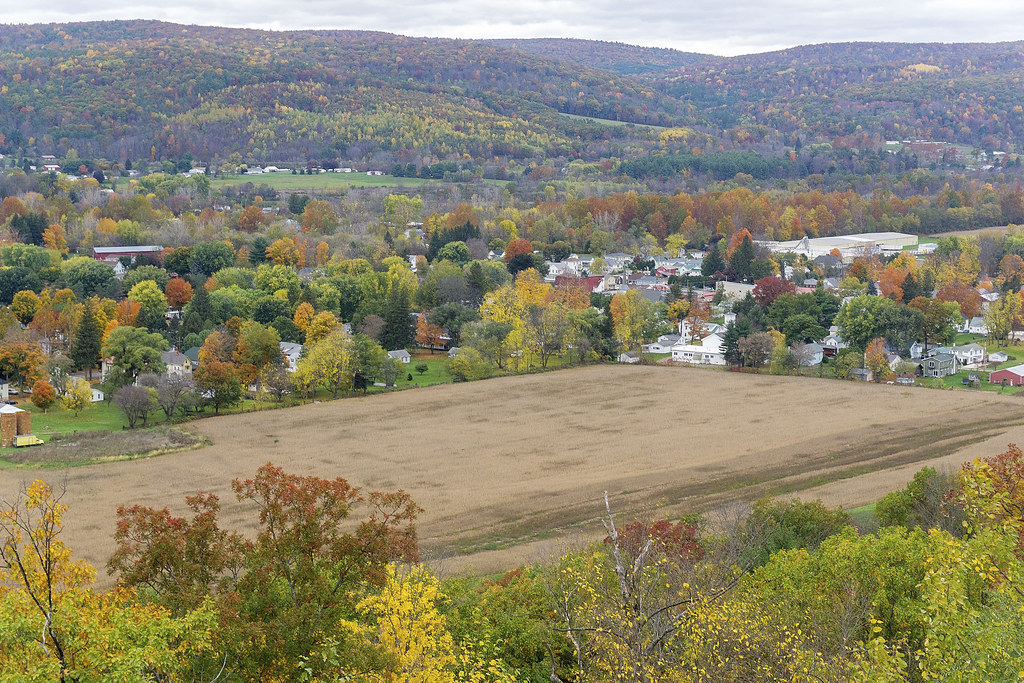
Sony a6000 – Sony E PZ 16-50mm 1:3.5-5.6 OSS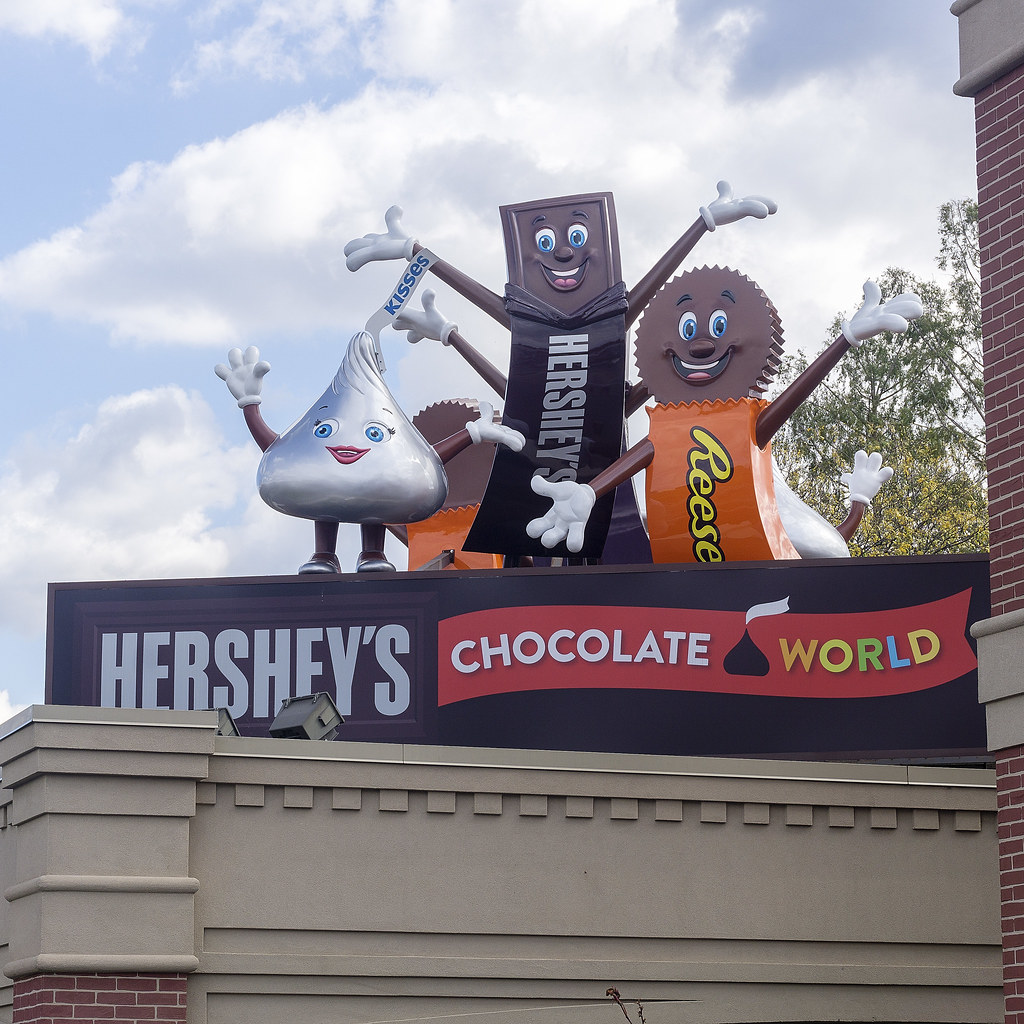
Sony a6000 – Sony E PZ 16-50mm 1:3.5-5.6 OSS
Graflex Crown Graphic – Fuji Fujinon-W 1:5.6/125 – Adox CHS 100 II @ ASA-100 – Blazinal (1+25) 5:00 @ 20C
The one thing that struck me with where I was staying in Maryland was how difficult it was to walk anywhere. Now I’ll admit I was right on US-1, a major federal highway. But to even get to the plaza next to my hotel, I would have to do a bit of jumping over hedges and walking around behind buildings. Which can look a bit suspicious if being done after a certain hour. The only other method was to walk along the road in the ditch, which also was unsafe. I also didn’t plan on driving into Washington, there is an amazing network of rail service, subways mainly that reach all the way outside of DC. And my hotel was close enough to one of the terminals that it only made sense. But the catch was that even though I could have easily walked there in a short amount of time, I couldn’t; there was no safe way for me to walk there. No sidewalks, no crosswalks, no nothing. So I had to drive; it took longer to drive to the station, and then I had to pay for parking (a buck, not bad, but still). Then it took even longer to drive back to my hotel because I couldn’t turn left into the hotel from US-1 because it is divided. So I had to drive farther along until I could turn left, then turn around and right to get back to my hotel. Maddening, I say. I also ran into this problem when, after a particularly long day, I wanted to get pizza delivered; the place didn’t deliver for the same reason: it didn’t make sense for their drivers to do that route. So I had to drive it myself; the pizza was terrible, too. But once I got onto the metro, everything that was wrong with my part of Maryland was a non-issue. I have used many different transit systems, but Washington’s is amazing. It uses a similar system as Montreal and Boston, where you pick your direction based on the terminus station. And having so many different lines that end up in the same terminus stations made navigation both easy and hard. But I knew where I wanted to go in all cases and made sure that I knew the station I wanted to get off at and which lines served each station. Making sure I knew where I needed to go and where to transfer. Plus plenty of good signage and maps in each station. And walking around the city was easy too, and having my phone, data, and Google Maps made navigation simple. Honestly, I didn’t miss my car at all in Washington, DC.
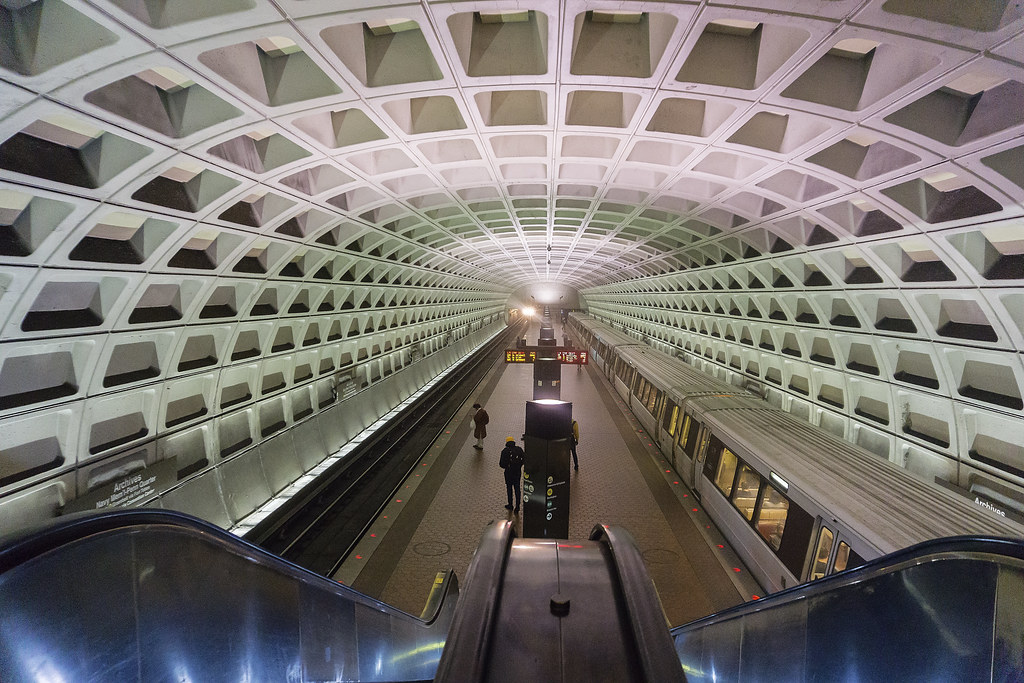
Sony a6000 – Sony E PZ 16-50mm 1:3.5-5.6 OSS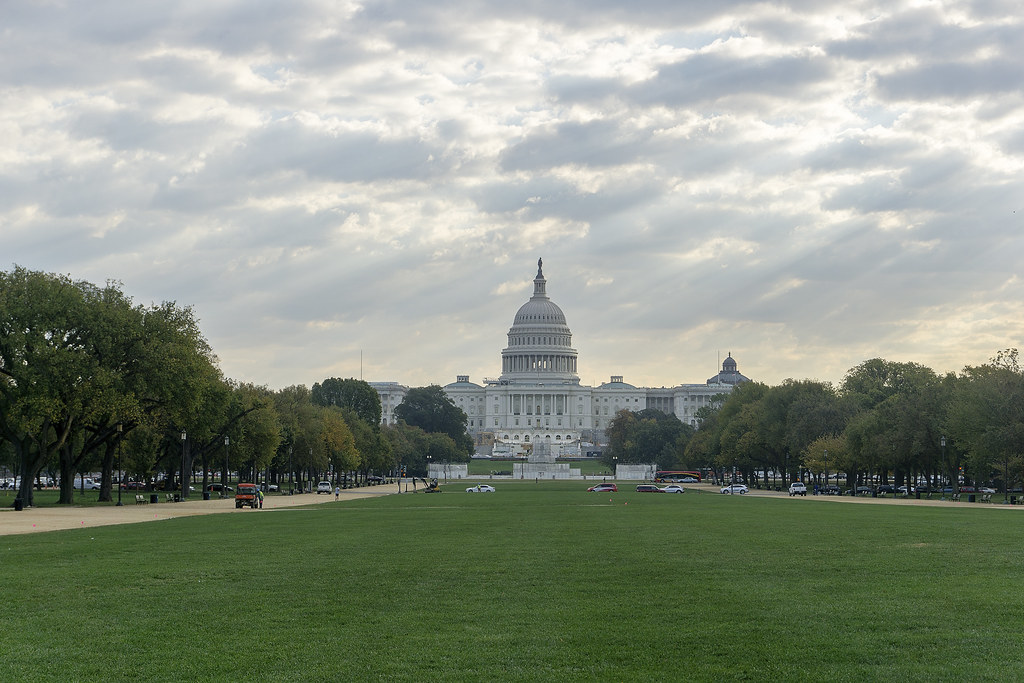
Sony a6000 – Sony E PZ 16-50mm 1:3.5-5.6 OSS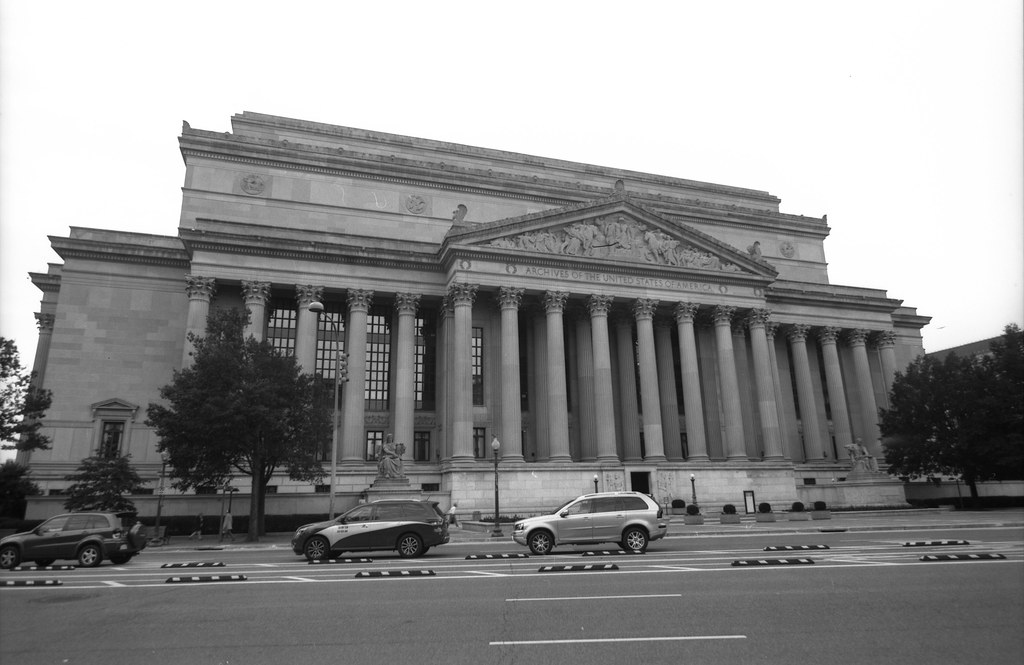
Nikon F5 – AF-S Nikkor 14-24mm 1:2.8G – FPP Mr. Brown @ ASA-6 – Kodak Xtol (stock) 10:30 @ 20C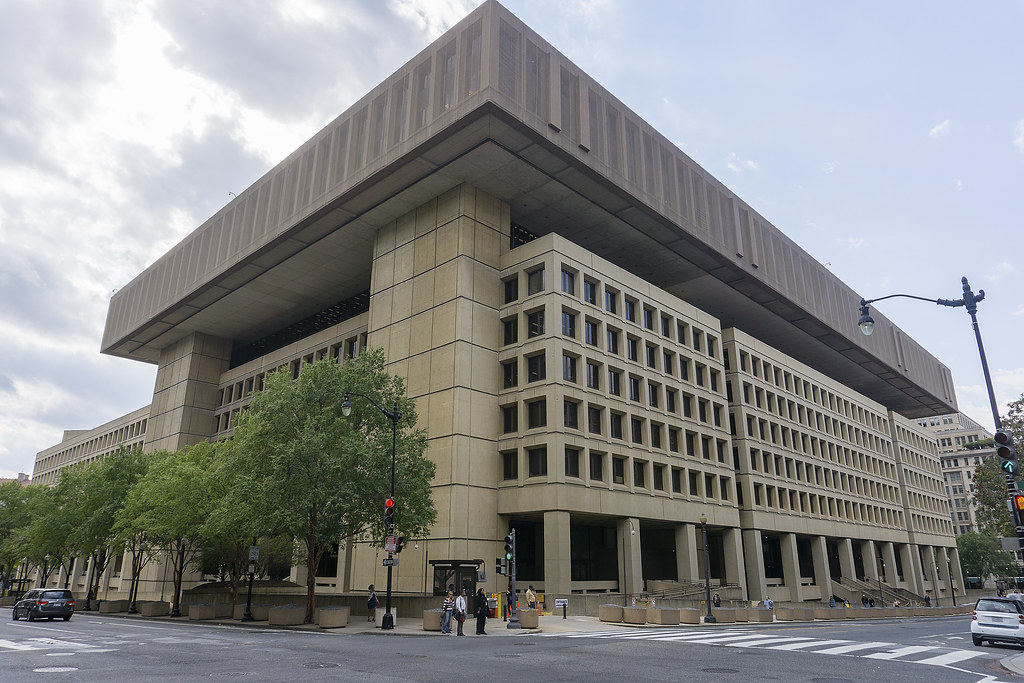
Sony a6000 – Sony E PZ 16-50mm 1:3.5-5.6 OSS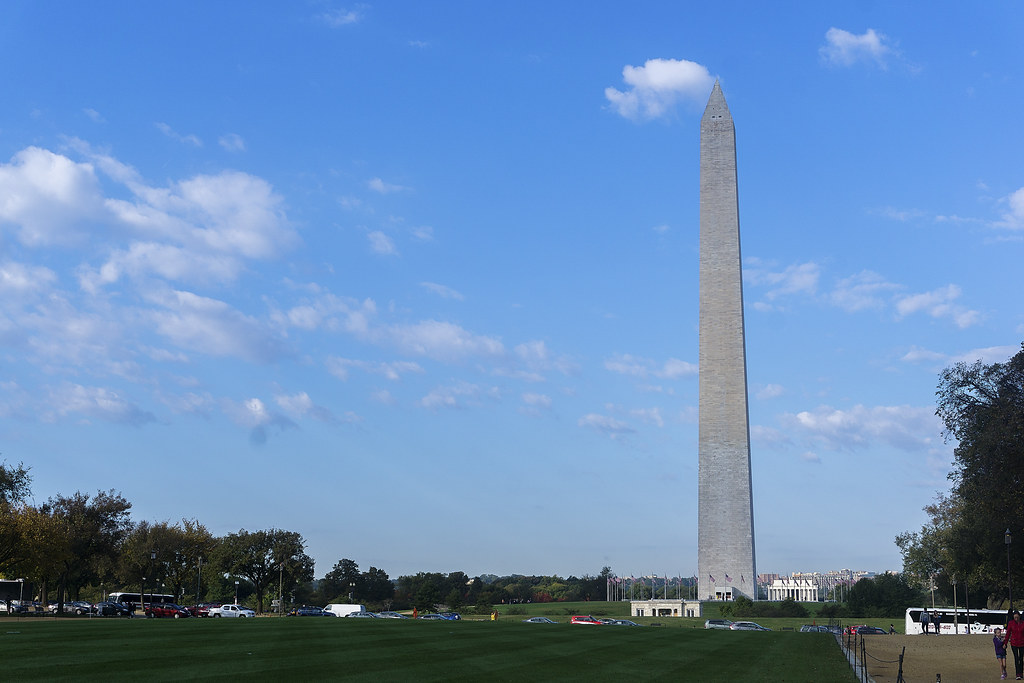
Sony a6000 – Sony E PZ 16-50mm 1:3.5-5.6 OSS
Like Chicago, my first taste of Washington came from the world of video games, although with Washington that familiarity comes from Fallout 3 and Call of Duty, and while the designers of that game got the look and feel of the capital right, in the real world, Washington is far less dangerous and far more intact and easier to move around. There’s also a lot more to see rather than endless wastes and ruins. The area where I spent much of my time is beautiful and consistent. That’s the one thing that Ottawa should have done far earlier: have a proper architect and unified style. While there are some efforts to do that with the Gothic Revival look, Washington, DC is clearly rooted in a Greco-Roman style, which does make a lot of sense. But there are also variations on the theme; not every building is the same, but they all share similar parts and design ethos which unifies them. I spent a lot of time just enjoying the architecture and photographing it. And when I say photographing, I mean it; I brought a lot of cameras and often brought too many with me during my trips into the city. I had, in addition to my a6000, the Nikon F5, Hasselblad 500c, Graflex Crown Graphic, and the FPP Debonair. And yes, that was way too many cameras, but I have to say I got some amazing photos on all of them. And looking back, I’m glad I took every camera with me and used them all at least once. I got some of the best b&w 4×5 work to date at that point, and leaned heavily into enjoying the architecture through the whole city. It wasn’t just the buildings that were amazing; the monuments and memorials were memorable as well. I never realised the size and scope of the Lincoln or Washington Memorials, or the pointed World War Two memorial either. Plus, finding the memorial to the Black soldiers who fought for the Union in the American Civil War stood out also. Honestly, I could have done even more if I had the chance to explore other parts of the city. Although there are probably areas that are not as nice as the areas that I explored. But the one thing that I never felt while I was there was unsafe. Sure, in some areas, there were people protesting, mostly in front of the White House, but I never felt unsafe, even when travelling a bit after dark. The subways were secure, and I never felt that I had to watch my wallet.
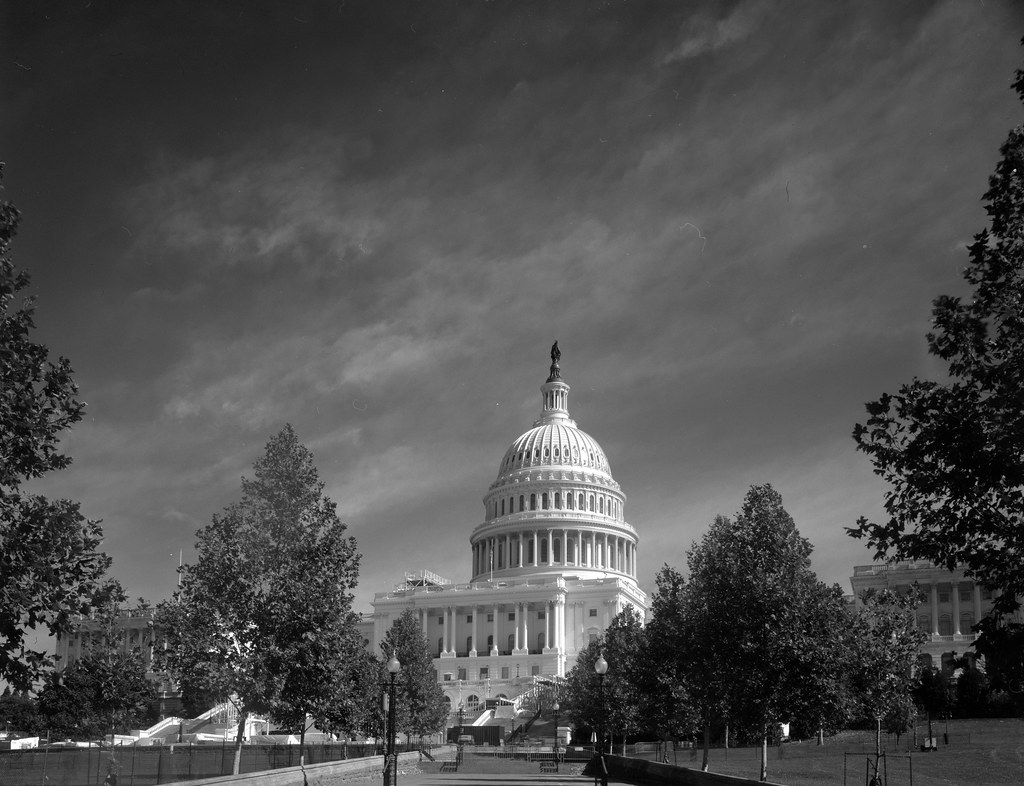
Graflex Crown Graphic – Fuji Fujinon-W 1:5.6/125 (Orange-22) – Adox CHS 100 II @ ASA-100 – Blazinal (1+25) 5:00 @ 20C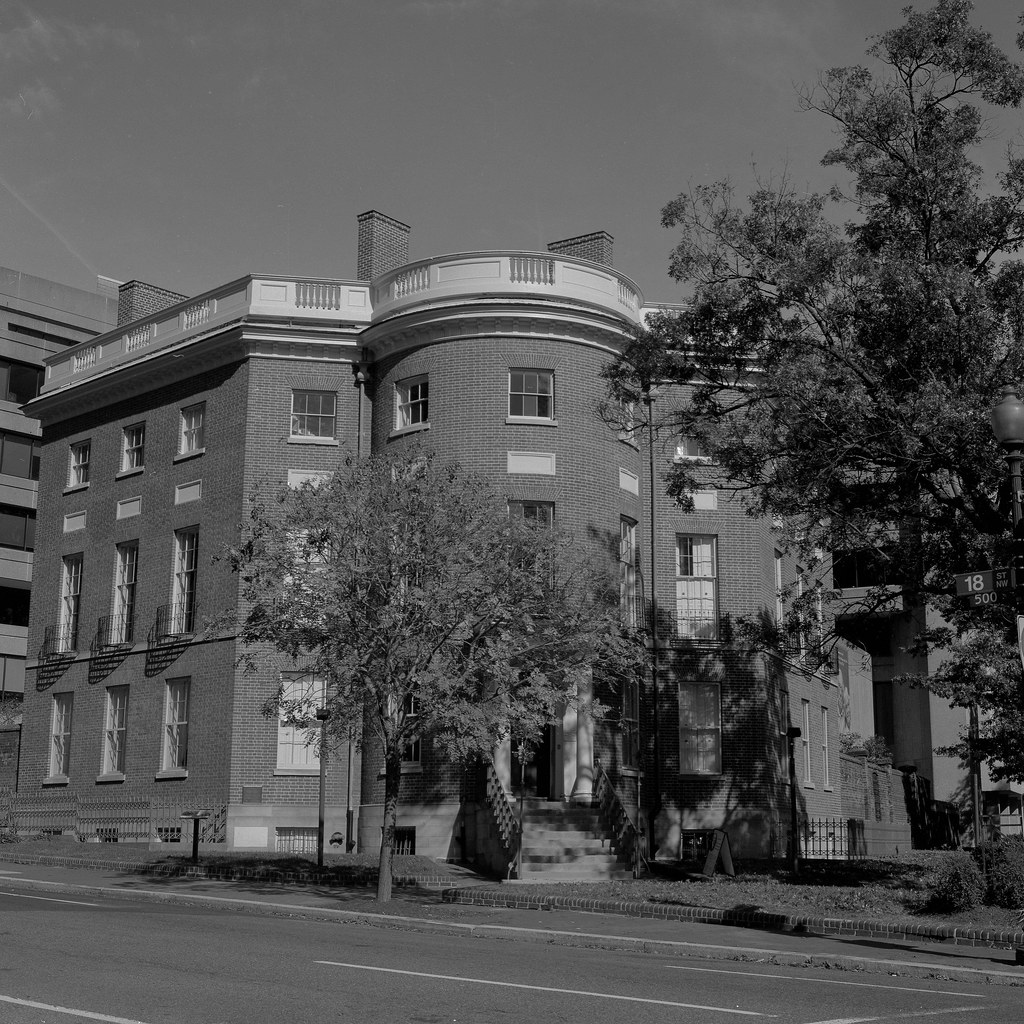
Hasselblad 500c – Carl Zeiss Planar 80mm 1:2.8 – Kodak TMax 100 (TMX) @ ASA-100 – Blazinal (1+25) 6:00 @ 20C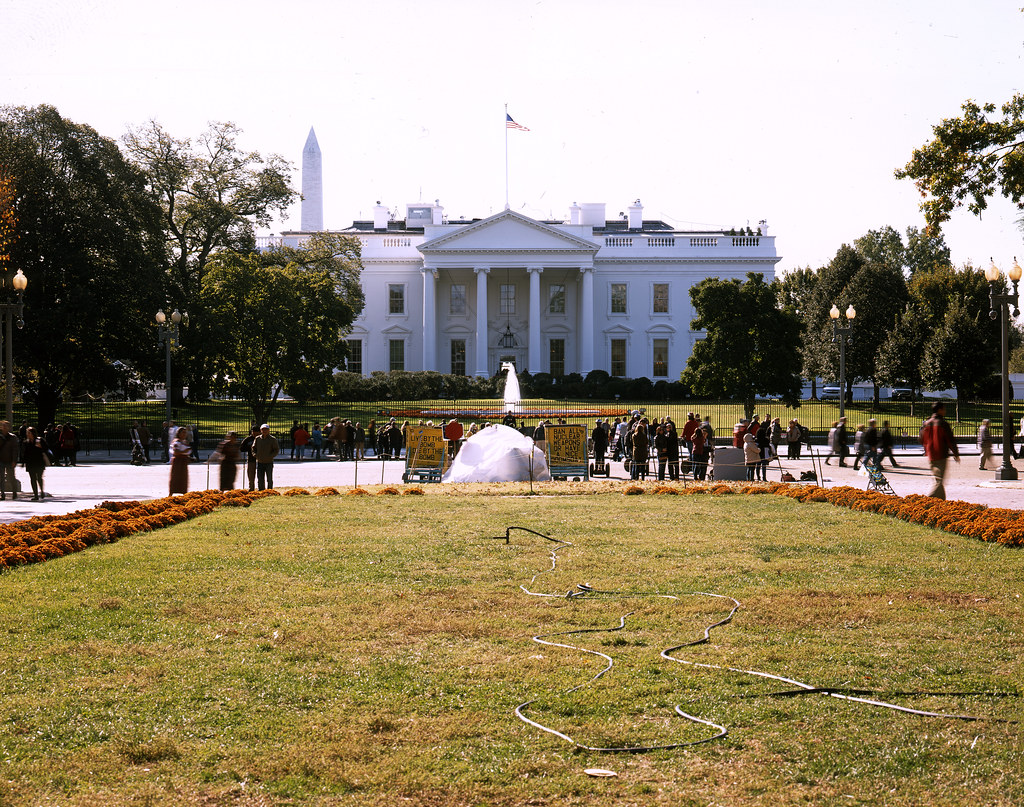
Graflex Crown Graphic – Schneider-Kreuznach Symmar-S 1:5.6/210 – Fuji Provia 100F @ ASA-100 – Unicolor Rapid E-6 Kit
Hasselblad 500c – Carl Zeiss Planar 80mm 1:2.8 – Kodak TMax 100 (TMX) @ ASA-100 – Blazinal (1+25) 6:00 @ 20C
Graflex Crown Graphic – Schneider-Kreuznach Symmar-S 1:5.6/210 (Orange-22) – Adox CHS 100 II @ ASA-100 – Blazinal (1+25) 5:00 @ 20C
Now, even though I went for the War of 1812 project, I did check out some museums in the city. I mean, with the entire Smithsonian network there, how could I not? I only had the chance to check out two, Air & Space on the Mall and American History. Air & Space is well worth the trip; even the one on the Mall is well laid out and has plenty to see. While I was there, they had a whole exhibit on aerial surveillance, which featured early cameras and a massive one that was once used on the U-2 spy plane. I also got a chance to see the Apollo 11 command module, an X-1, a Wright Flyer, a V-1 and V-2 rockets and plenty more. Now I didn’t know when I was planning my trip that the big stuff is housed elsewhere, and I probably should have made a point of going out to see it during the trip. But it was only after I got there and had my plans in place that I learned this. So I didn’t get to see Enola Gay or another shuttle. American History was also an interesting one; it is filled with a ton of highlights: Kodak’s first digital camera, early computers, the Babbage Engine, and more. There is the lunch counter where a peaceful sit-in against segregation was held in North Carolina, and the highlight was probably seeing the original Star-Spangled Banner. Now I couldn’t take a photo of it because that was strictly prohibited. And while I did consider sneaking in a shot, they had two museum employees watching like hawks, and even caught someone trying to do that. So I decided to take it in, mind. The flag, for being 200 years old, still looked good; parts were, of course, missing. It had been cut up during the interim period after the war until it was preserved in a museum. The best part about the museum is that it didn’t stray away or try to hide the darker parts of American history; it laid it all bare for all to learn from. I’m glad they took the word seriously that history isn’t there for us to like or dislike but rather for us to learn from. The third museum I visited in the city was the Spy Museum; it was the most fun because it was the most interactive. You got to see all sorts of Cold War-era gadgets, crawl through some air ducts, and, again, they presented things factually. There was a whole exhibit about the Iran Hostage Crisis, complete with all the fake scripts for the film Argo, and examples of the Canadian Passports provided to US Embassy workers to smuggle them out of the country according to the plan cooked up by the Canadian ambassador. It was, sadly, only a small slice of the museums available, but I didn’t have time to see them all and do everything else I wanted to. Because you could easily spend a week and not see everything the Smithsonian had to offer.

Sony a6000 – Sony E PZ 16-50mm 1:3.5-5.6 OSS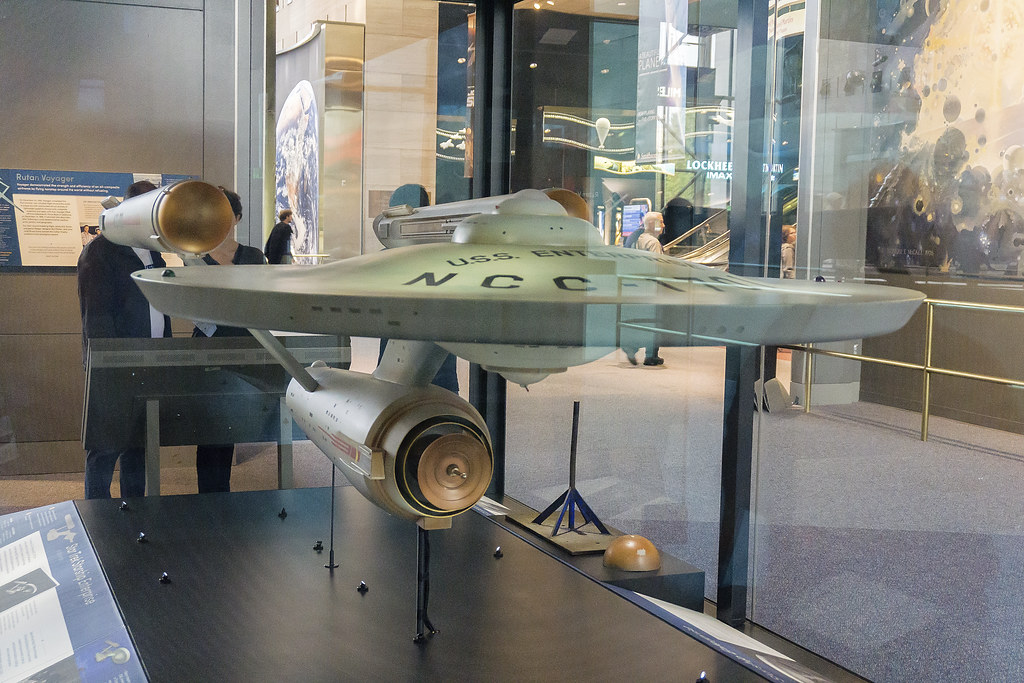
Sony a6000 – Sony E PZ 16-50mm 1:3.5-5.6 OSS
Sony a6000 – Sony E PZ 16-50mm 1:3.5-5.6 OSS
Sony a6000 – Sony E PZ 16-50mm 1:3.5-5.6 OSS
Sony a6000 – Sony E PZ 16-50mm 1:3.5-5.6 OSS
Alright, Baltimore. Again, going to Baltimore was specifically for War of 1812-related photos because if you’re doing War of 1812-related sites, you can’t go to Baltimore at the same time, but you will need to drive. I had a lot of sites planned because I had no other plans to go back to this area. I made a point of getting out early to avoid major traffic, with my first stop at Fort McHenry. Of course, I got there well before the site opened and had a chance to wander around the area briefly. Then it was onto the site just as they opened. The introduction to the site was one part patriotism, another part propaganda. I mean, this is the site where the Star-Spangled Banner was burned into the American mind. It would have been more pointed if they were able to fly the big flag, but the weather had turned a little nasty at this point. Once we were let out of the theatre, I got to explore the site. The fort itself is small, far smaller than I expected. Plus a lot of it had been changed since 1812, with much of the fort being expanded during the American Civil War. But there was still a lot related to 1812, because of course. Once I was done there, far earlier than I expected, I did a lot of driving around Baltimore and went to all kinds of areas. I went downtown for a few locations. The main Battle Memorial right in downtown and the Francis Scott Key Memorial. A park, which was the site of Rodgers Bastion. And then it was to a less nice area for the Young Martyrs’ Memorial. Now this memorial is in a rather depressed area; it looked far more like parts of Ohio, Buffalo or Gary. I found a safe spot to park while I was looking for the memorial, and was asked by the locals what I was doing. I explained the memorial I was looking for, and they were more than happy to show me. Then asked why I was looking for something that was apparently hyper-local. Then it was a couple of cemeteries, one I could access, the other was behind a locked gate at a hospital, and the guard couldn’t let me in (they didn’t have the key and didn’t know who did). Once I was done there, it was back out of the city for a start at North Point, a bit of light trespassing, and then back towards the city. I thought I had timed everything right to avoid traffic, but I didn’t. And ended up getting stuck getting back to my hotel. Again, even though I ended up in a less-than-ideal neighbourhood for a white man, I never once felt unsafe.
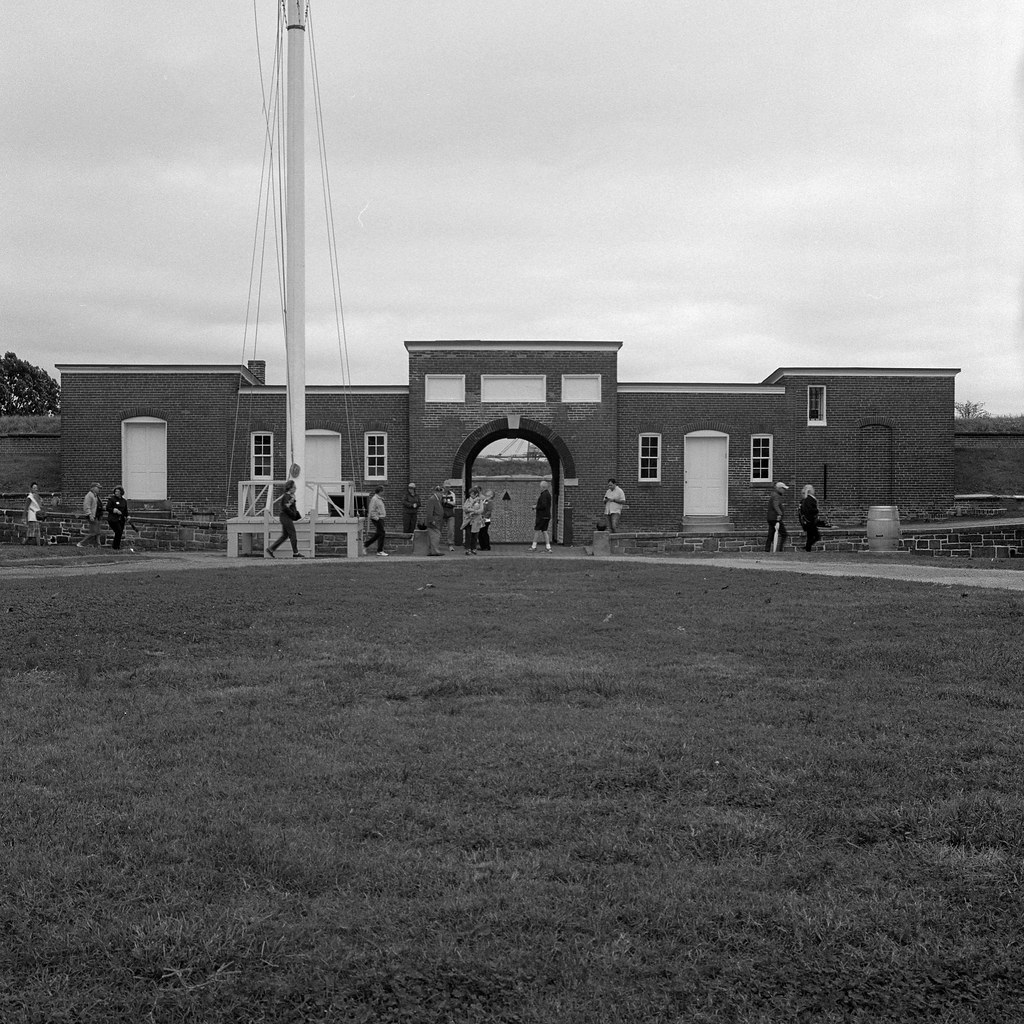
Hasselblad 500c – Carl Zeiss Planar 80mm 1:2.8 – Kodak Tri-X 400 @ ASA-400 – Kodak D-23 (Stock) 7:30 @ 20C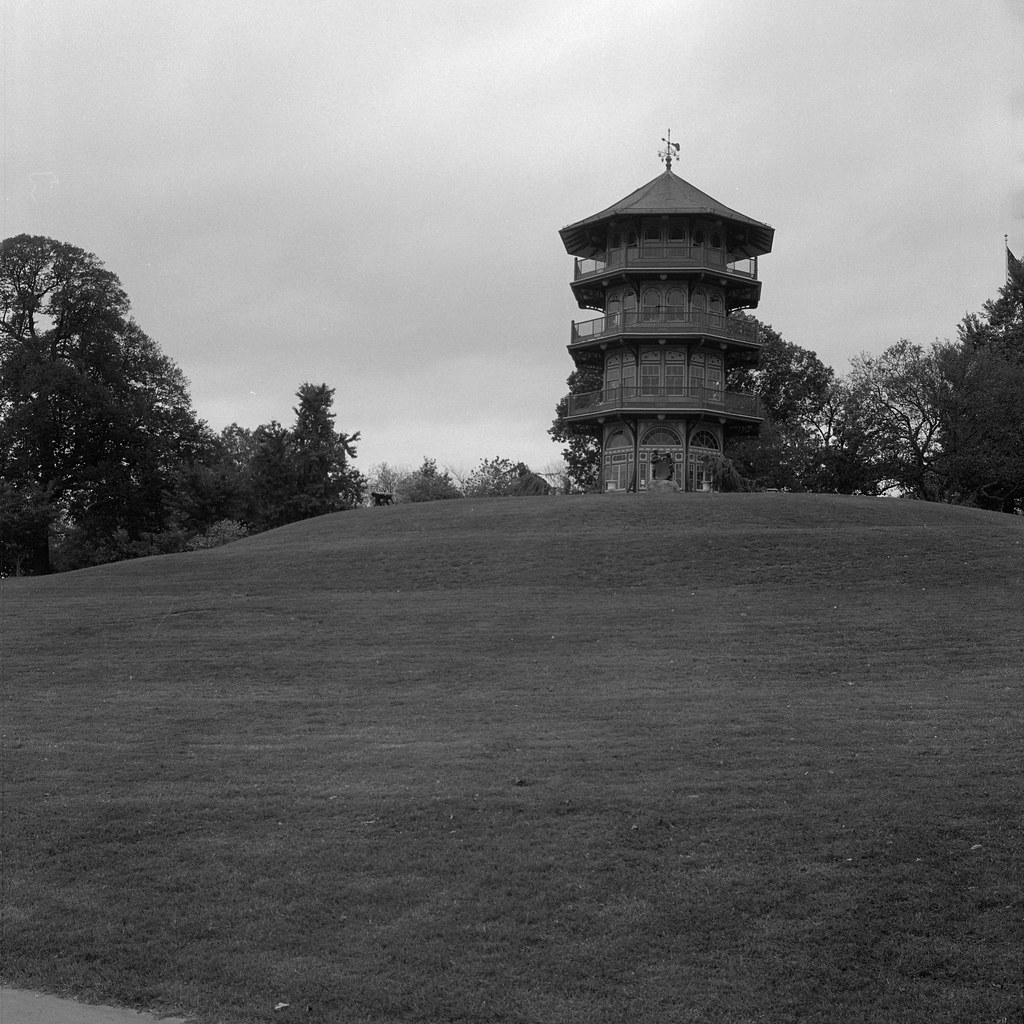
Hasselblad 500c – Carl Zeiss Planar 80mm 1:2.8 – Kodak Tri-X 400 @ ASA-400 – Kodak D-23 (Stock) 7:30 @ 20C
Hasselblad 500c – Carl Zeiss Planar 80mm 1:2.8 – Kodak Tri-X 400 @ ASA-400 – Kodak D-23 (Stock) 7:30 @ 20C
Hasselblad 500c – Carl Zeiss Planar 80mm 1:2.8 – Kodak Tri-X 400 @ ASA-400 – Kodak D-23 (Stock) 7:30 @ 20C
Hasselblad 500c – Carl Zeiss Planar 80mm 1:2.8 – Kodak Tri-X 400 @ ASA-400 – Kodak D-23 (Stock) 7:30 @ 20C
Would I like to go back to Washington? That’s an easy answer: yes, I would. It’s a lovely city with a lot to offer, and if I went, my purpose would be to check out as many Smithsonian museums as possible. The problem is that I don’t want to go anywhere near Washington with the current administration and what they’re doing. The erasure of history because it doesn’t live up to your personal narrative or the narrative of those who feel uncomfortable around the hard truths of history. We’re all coming to terms with the hard truths of our shared history and what has been done to fellow humans. And it is supposed to be uncomfortable, not in a way that will leave everyone riddled with guilt for the rest of their lives because of what ancestors did in the past. But to spur us on to be better now and to dismantle the systems built over the years, which often lead to one group being preferred over another. Not because of what they have done, but because of what others have done in the past. We’re all in this mess. I’m happy to say that I did get everything I needed for my War of 1812 project, got to see some museums, hang out with a friend from Photostock and had a lovely time overall. Then a fast, crazy drive back home, in time to attend a Halloween dance (Ceilidh) with my wife. This post was only a small amount of photos from the trip, you can as always check out the entire collection over on Flickr.