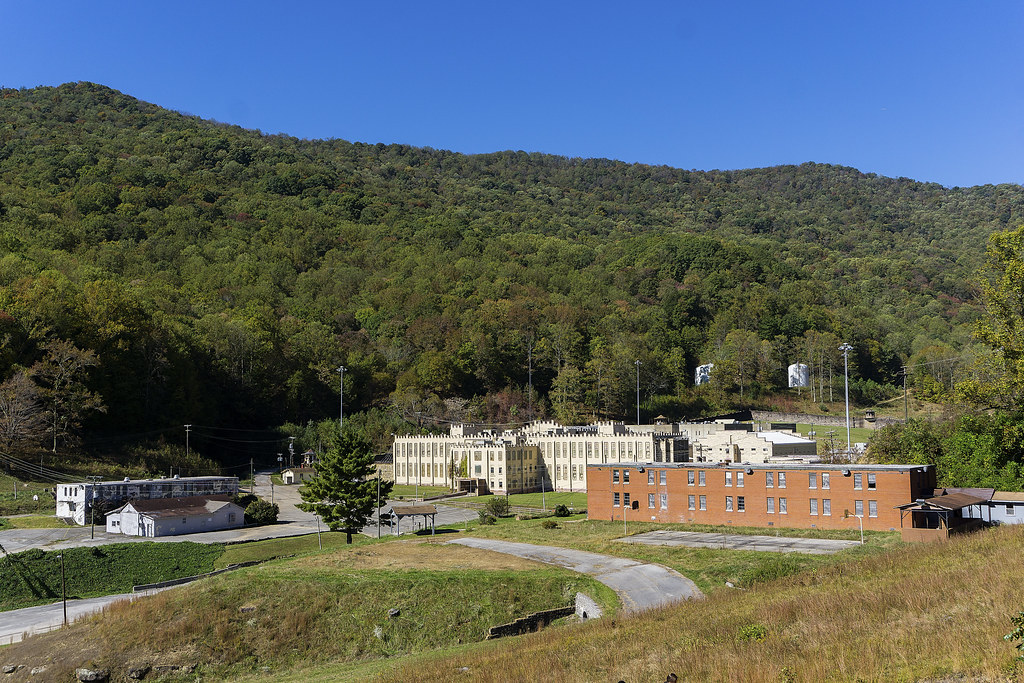
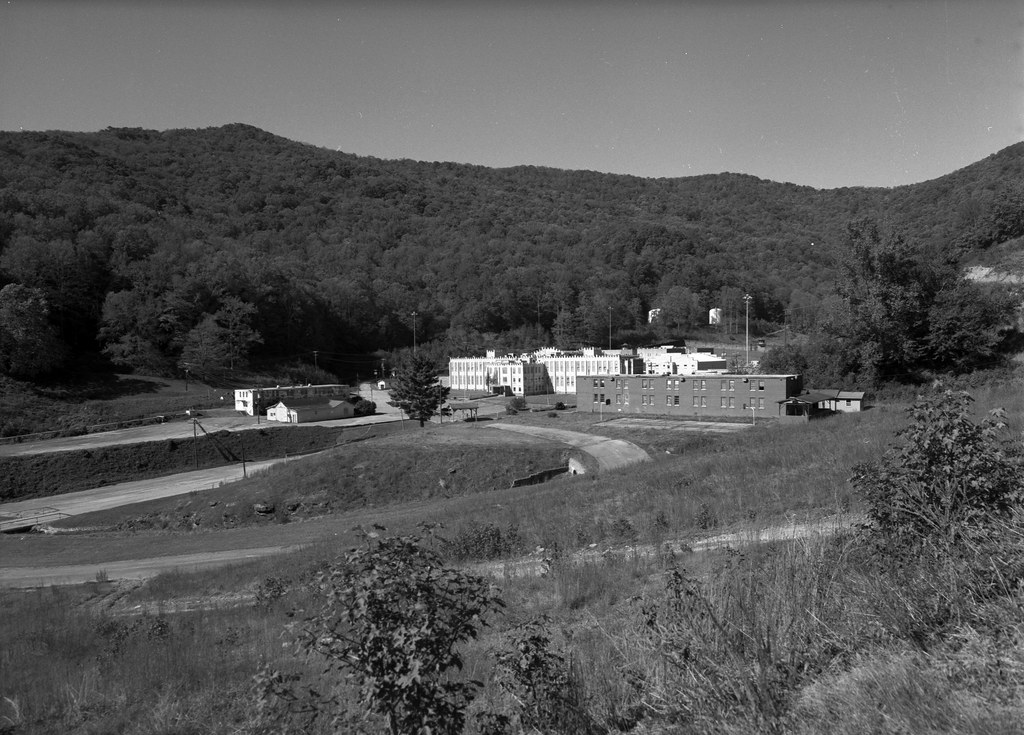
I love a good old prison, and when it comes to prisons, Brushy Mountain is everything that you would expect from an American penitentiary built in the late 19th and early 20th Centuries. It’s imposing and frightening, and it has many ghost stories attached to it. What makes this spot even better is that it has been reopened as a tourist location that embraces the fact that it was one of the worst places to be jailed.
Sony a6000 + Sony E PZ 16-50mm 1:3.5-5.6 OSS
Part of the post-war reconstruction in the failed and defeated Confederate States of America included the rapid industrialisation and expansion of modern infrastructure. Part of that reconstruction included the use of coal. Coal provided heat for homes and power for industry and, more importantly, the modern railways. Coal mining in the mid-19th Century proved to be a dangerous occupation, and the contemporary labour protections we enjoy today are often won by blood and strong unions. But this came at a cost to the mine owners, who felt that paying the wages for private employees was cutting into their profits. In 1877, the Tennessee State legislature began to lease prison labour to coal mining companies. The owners enjoyed this agreement as they only had to pay the State, not the convicts now working in the mines. The results saw a general depression in the wages of private employees. Resentment continued to grow and, in 1891, turned to violence as ex-employees who were replaced by cheaper slave convict labour began a series of skirmishes against their former employers. The miners targeted the stockades that housed the convict labour, releasing the prisoners into the wild (many escaped without being recaptured) and also mining properties. The State called the local militia at the companies’ insistence to oppose the workers. Violent clashes lasted for about a year and resulted in several deaths on both sides and many workers arrested for their role in the violence. The action gained supporters on both sides of the conflict, and news of the Coal Creek War spread throughout the United States. Two key things came out of the conflict. The first was the downfall of Tennessee governor John P. Beaucanan, and the second was the termination of the convict leasing program; no new contracts were made, and the last contracts expired in 1896. However, the State saw the value in convict labour, and rather than let private companies profit off the coal mining industry, it established new prisons that doubled as coal mines. Starting in 1894, the State purchased a plot of land near the hamlet of Petros, Tennessee and began the construction of a new prison mine. Brushy Mountain State Penitentiary consisted of a single wooden barracks building, a containment fence, a coal mine, a coke oven and various support buildings, all connected to a railway spur. A total of 210 convicts assisted in building the prison and railway spur and soon became the first inmates in the new prison when it opened in 1896. The prison’s location ensured that anyone who managed to escape could not get far in the rocky, remote environment. It also meant that only the worst were sent to Brushy, housing the prisoners deemed too dangerous to incarcerate elsewhere or had proven to be disciplinary problems at other jails. Brushy quickly earned a reputation as being a violent, unsafe and unsanitary prison; while there was never a death row, a prisoner sent to Brushy could expect to die there, and many did.

Sony a6000 + Sony E PZ 16-50mm 1:3.5-5.6 OSS
Sony a6000 + Sony E PZ 16-50mm 1:3.5-5.6 OSS
Sony a6000 + Sony E PZ 16-50mm 1:3.5-5.6 OSS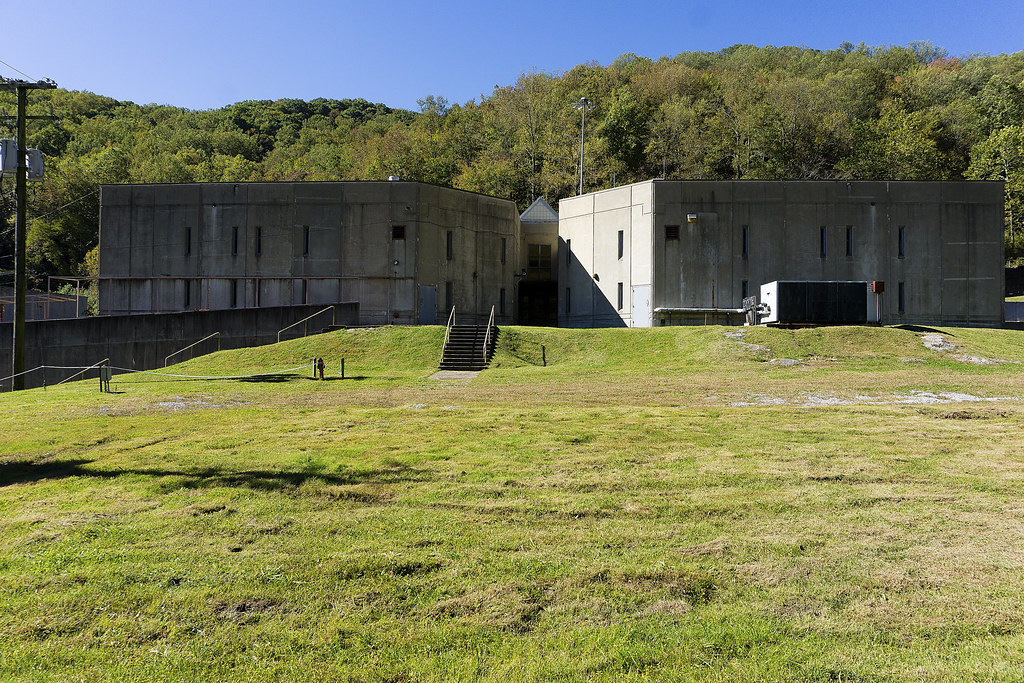
Sony a6000 + Sony E PZ 16-50mm 1:3.5-5.6 OSS
Sony a6000 + Sony E PZ 16-50mm 1:3.5-5.6 OSS
Brushy’s reputation continued to tank as modern technologies such as electricity and inside plumbing were nowhere to be found; parallels to the Soviet gulags in Siberia were made. Prison labourers worked twelve-hour shifts and slept stacked one on top of the other. By the 1930s, Brushy housed 1,000 inmates in a space designated for no more than 300. Work on a new prison building started in 1932, again using convict labour to quarry and construct a new stone prison. The new building had electricity and plumbing and was made of stone. Shaped in the form of a Greek Cross and stood four storeys. Surrounding the property would be a new eighteen-foot stone wall. While this move temporarily relieved the complaints at Brushy, the reputation would quickly return. Additional structures were added in the 1940s, including a laundry and gymnasium. In 1957, the former solitary confinement building or “The Hole”, would be replaced by a maximum security wing or D-Block; outside the prison walls, a minimum security wing was also built. This wing housed low-risk offenders leased out to the local community, most of whom worked in the Petros Volunteer Fire Department. Inside the walls, the mining continued until a series of accidents resulted in the deaths of several inmates and the mine becoming less and less profitable. Through Warden Lake Russell’s efforts, the coal mines ceased operations in 1965. Brushy would become a maximum security prison in the same decade and would be used to house the state’s worst offenders, along with many from the greater United States. In 1969, James Earl Ray was sent to Brushy after his conviction in the murder of Martin Luther King Junior with a sentence of ninety-nine years in prison. What separated Brushy from other prisons in the state is that the guards were unionised and, in 1972, citing specific problems with conditions and personal safety, went on strike. Hoping to force the union out, Governor Lamar Alexander closed Brushy and transferred the population to Nashville. The Union and the State agreed, and the prison was reopened in 1976. Late in the decade, Ray and six other inmates made a daring escape, staying on the lamb for fifty-eight hours but only getting nine miles from the prison before being recaptured. While violence and racial tensions were always present at Brushy, it came to a head in 1982 when seven white inmates held a guard hostage, taking his gun, found four rival black inmates, killing two of them. The state saw fit to change Brushy’s role from a maximum security prison to a prisoner intake and classification centre to help with this new role and ensure safety and security. A new maximum security annexe was completed in 1987. Brushy would be joined administratively with the Morgan County Correctional Centre in 1998 (the same year James Earl Ray died at the Lois M. DeBerry Special Needs Facility in Nashville. Starting in 2008, the state began shutting Brushy down, moving the inmates to Morgan County C.C. in small groups and in secret, with the last inmates leaving in 2009. Only a handful of people attended the small ceremony as the doors were closed for the last time. The old prison lay closed and abandoned for a short decade when a group of entrepreneurs formed the Brushy Mountain Group in 2013. Together, the group worked to clean up and renovate Brushy, which reopened in 2018. Today, Brushy is a museum with self-guided tours and interpreters sharing the history and stories, many of whom are former employees. There is also a BBQ restaurant called the Warden’s Table and a distillery.

Sony a6000 + Sony E PZ 16-50mm 1:3.5-5.6 OSS
Sony a6000 + Sony E PZ 16-50mm 1:3.5-5.6 OSS
Sony a6000 + Sony E PZ 16-50mm 1:3.5-5.6 OSS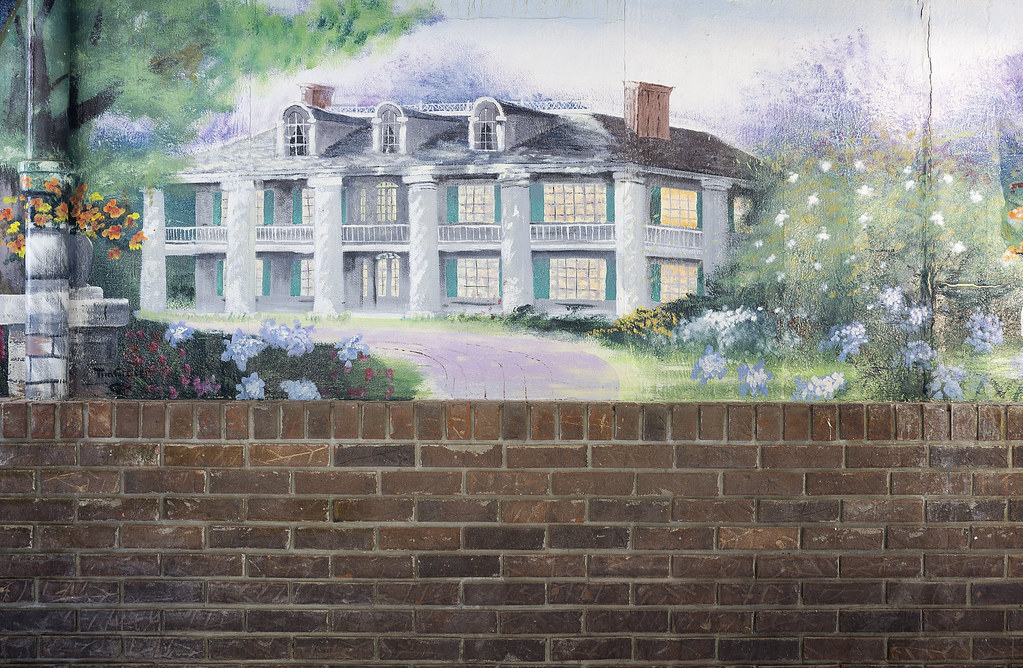
Sony a6000 + Sony E PZ 16-50mm 1:3.5-5.6 OSS
Sony a6000 + Sony E PZ 16-50mm 1:3.5-5.6 OSS
You want to do what? My eyebrows were raised when I asked my fellow explorers to confirm what they wanted to do. What was it? Sleep overnight at Brushy Mountain, then continue to explore it in the morning. This is similar to “pre-dawning,” where you enter before the first light. This was October. While the weather is generally better in Tenessee than in Canada, the night’s temperatures were set to fall, and none of us had the equipment to stay warm in an abandoned prison. Of course, suppose you’re someone who follows the paranormal scene. In that case, you’ll know of the many stories about the haunted nature of the location. It wasn’t the ghosts that scared me. It was the weather. And, short of going to an outdoor store and getting the gear needed, I had no desire to sleep overnight at an abandoned location. It’s interesting because, with all my exploring, it was the one thing I had never done. I tried several times, but something happened each time that prevented me from following through. I got a hotel room nearby and convinced the others to stay also. We headed to Brushy the following day; the prison is in a rural mountainous area requiring one to tread carefully. This was a few years short of the prison’s reopening as a tourist location. We parked at a nearby trailhead above the prison site, and there was no walking at the main gate. The area around the prison is all state-park these days, so it is easy to find a normal parking space even for someone in an Ontario-plated car. And off we went; the hike in was challenging but not too hard; once we found a way down, it was a quick dash across. Then, sending a climber up the outside to open a door we were in without incident. Brushy is by no means a big prison, but there were lots to see; we got through almost all the original 1930s buildings with the cell blocks. A lot of stuff had already been cleared out, probably as part of the preparation for reopening. The small, crowded cafeteria with the pastoral wall paintings, the crowded cell blocks. The one thing we missed was some of the hospital sections and auditorium. Probably because we couldn’t get access to them through locked doors. The prison chapel also proved closed, but we entered the 1941 gymnasium. The one interesting section was the maximum security annexe from the 1980s and the original D-Block, which was where the most violent prisoners used to be held, complete with outdoor cells. We were inside for at least a few hours before making it out. The one thing is that while inside, I didn’t feel anything weird or strange; of course, I didn’t know the entire history of the place. I got my chance to get beautiful exterior shots of the castle from up close and from above on the way out. Despite the location and the small-town vibe, we got in and out without any local colour or trouble.

Sony a6000 + Sony E PZ 16-50mm 1:3.5-5.6 OSS
Sony a6000 + Sony E PZ 16-50mm 1:3.5-5.6 OSS
Sony a6000 + Sony E PZ 16-50mm 1:3.5-5.6 OSS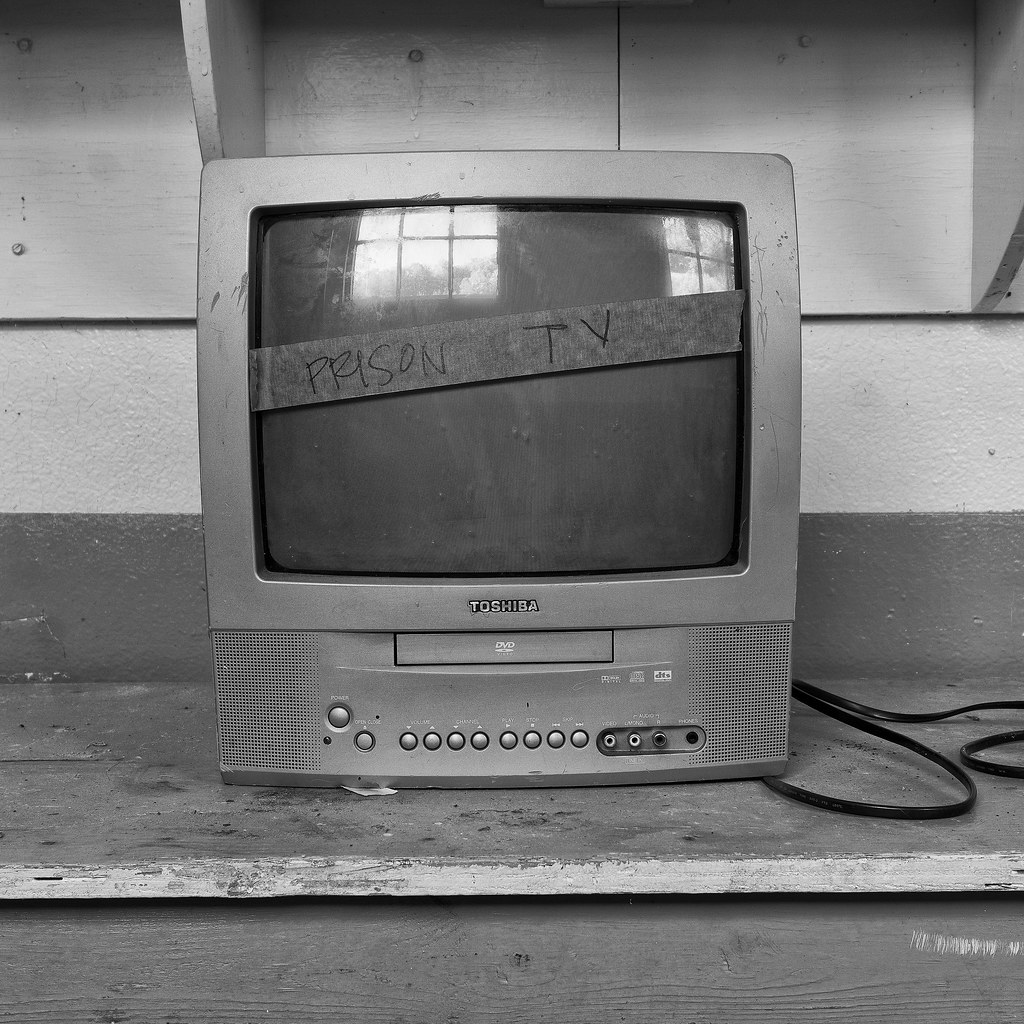
Sony a6000 + Sony E PZ 16-50mm 1:3.5-5.6 OSS
Sony a6000 + Sony E PZ 16-50mm 1:3.5-5.6 OSS
I don’t know what to think about my photos here, but they’re good. Don’t get me wrong. But nothing stands out about them; they all share my standard style in composing in abandoned buildings, lots of leading lines, flat compositions and a mix of wide and detailed shots. I can’t recall if I had my a6000 mounted on a tripod or if I used it handheld, which I remember doing on this trip. I regret not getting more photos here; that is one thing I’m sure of. One interesting thing is that I decided to use the “Panatomic-X” trick with the roll of TMax 100 I shot here: over-exposing the film to ASA-32 and then pulling in the development using Xtol. But you’ll also notice that there isn’t that same sharpness that you would expect. I scanned these while they were still heavily cupped from development. I should have left them back-rolled longer before putting them through the scanner. However, the technique still worked in the space, and the low-contrast work was juxtaposed against the harsh environment.
Pentax 645 – SMC Pentax A 645 35mm 1:3.5 – Kodak TMax 100 @ ASA-32 – Kodak Xtol (1+1) 8:45 @ 20C
Pentax 645 – SMC Pentax A 645 35mm 1:3.5 – Kodak TMax 100 @ ASA-32 – Kodak Xtol (1+1) 8:45 @ 20C
Pentax 645 – SMC Pentax A 645 35mm 1:3.5 – Kodak TMax 100 @ ASA-32 – Kodak Xtol (1+1) 8:45 @ 20C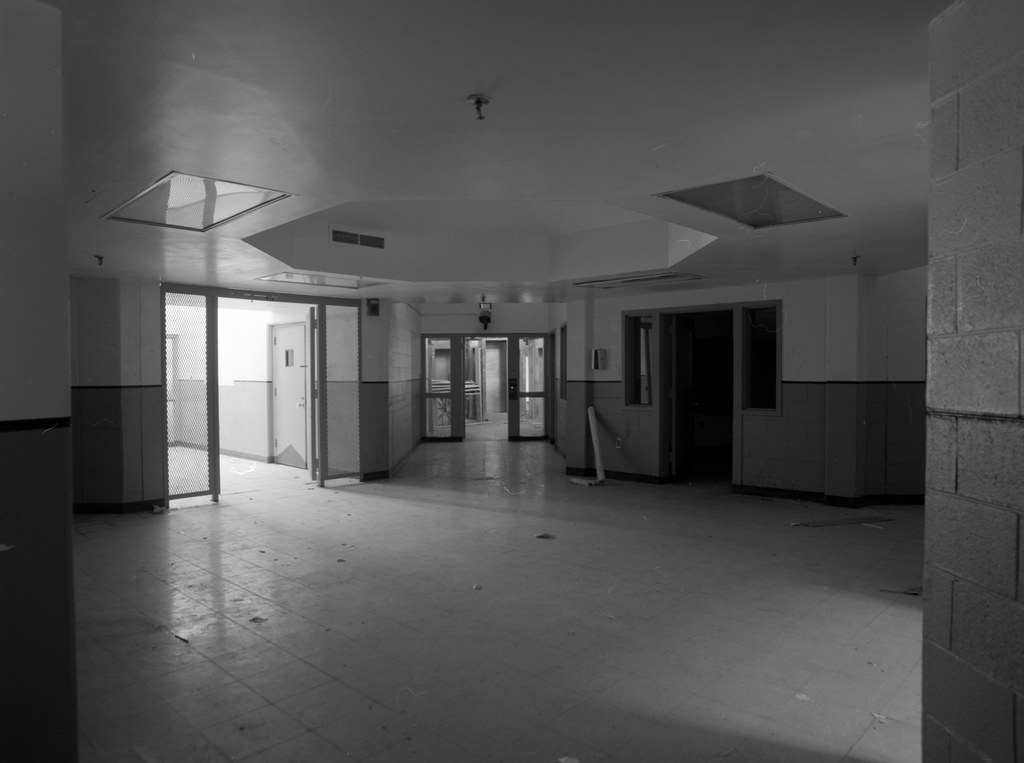
Pentax 645 – SMC Pentax A 645 35mm 1:3.5 – Kodak TMax 100 @ ASA-32 – Kodak Xtol (1+1) 8:45 @ 20C
Pentax 645 – SMC Pentax A 645 35mm 1:3.5 – Kodak TMax 100 @ ASA-32 – Kodak Xtol (1+1) 8:45 @ 20C
One of the more interesting things about Brushy is that I ran a search on YouTube for the prison and came across a paranormal channel (I know). I probably got half an hour in and had to turn it off. In all fairness, I went to Brushy during the day. I did not feel anything weird about the spot other than the usual healthy paranoia for exploring a site in the United States. And some of the areas they visited in the video are the same as mine. We didn’t get into some areas, and I cannot recall why. But again, I did not feel anything weird or have a sense of darkness. But it is a paranormal YouTube channel, and they are amping up the horror aspect. I’m glad that Brushy survives and is a place to visit and explore legally today, and it has some interesting parts. I would love to return to try the Warden’s Table, visit the museum, and pick up something from the distillery. You can check out more about Brushy on their website and see all my photos over on Flickr.