After I got into the Nikon autofocus system, I started looking at cameras that were better than my Nikon F80. Don’t get me wrong, the Nikon F80 was the right camera for me at the time, and it produced some fantastic images and got me on the course I’m still on today with the Nikon system. But I knew there was something better out there, and I quickly latched onto the Nikon F5 as my grail camera of that time. But at that time, the Nikon F5 still commanded high prices on the used market, and many professional photographers were still using these cameras. But I wasn’t going to give up on this camera, as I had on the Minolta Maxxum 7, given my previous leanings towards Minolta gear. And it would be almost ten years before I finally got my hands on my own Nikon F5.

The Nikon F5 is the first grail camera I got my hands on, and the F5 I use today is the same one I got all those years ago. Now, when I first got the F80 and started looking at the F5, the cost on the used market was still pretty high. I can’t recall the exact prices at that time. Used F5s were still selling for over 1,000$ here in Canada, mainly because professional photographers were still using them before they switched to digital. It would be another nine years before I got the F5, and that was well after my F80 had left the stable. By this point, a mint copy of the camera with little use was still running for around 1,000$ an ugly one was getting into the 300$ range. But I wanted a camera that would work, not be a collector’s piece, and still give me years of service. Those cameras cost between 500$ and 700$ in 2014. That was still pretty expensive, but I had a trick up my sleeve: I had an upcoming wedding to photograph. I did some calculations, ensured that all my wedding expenses were covered (including gas and a hotel stay), then added most of the cost of the F5. The wedding proved to be something else; the weather turned sour quickly, and the conditions inside the church were even more difficult. I learned a lot from the wedding that I still apply today. But I did get my F5 out of the deal, so it wasn’t too bad in the end.


It’s hard to put into words the feeling of getting your hands on a camera you’ve had your eye on since starting a journey into a specific camera system. The F5 is important because it was my second grail camera and the first one I got my hands on. That first grail camera, the Maxxum 7, only recently came into the stable. It was also a camera I waited a long time to get, and even at one point thought I would never be able to get my hands on one at a price I was willing to pay. The F5 taught me to wait until I could afford the camera, and to use my skills as a paid professional to purchase a piece of kit I saw as a way forward. And since then, the F5 has become almost standard for every professional job I’ve photographed because it’s so easy to use alongside my D750.


Interestingly, the F5 is the F-Mount camera that stuck around. I got the F5 in 2014, but a year later, I had won the Sony a6000, a compact APS-C E-Mount camera. I would eventually sell off my Nikon D300. But the F5 stayed along with all the lenses. It would be another five years before I picked up another Nikon digital SLR. Yet through all that time, even as I considered switching my digital system to Sony, the F5 stuck around. And that’s what makes the F5 an important camera on my journey: if I hadn’t stayed with a near-complete Nikon AF kit, I probably would have moved deeper into the Sony E-Mount. Where the F80 got me into the system, the D70s made me understand it, the D300 got me to look at my work professionally the F5 helped me stay and get me back into Nikon.


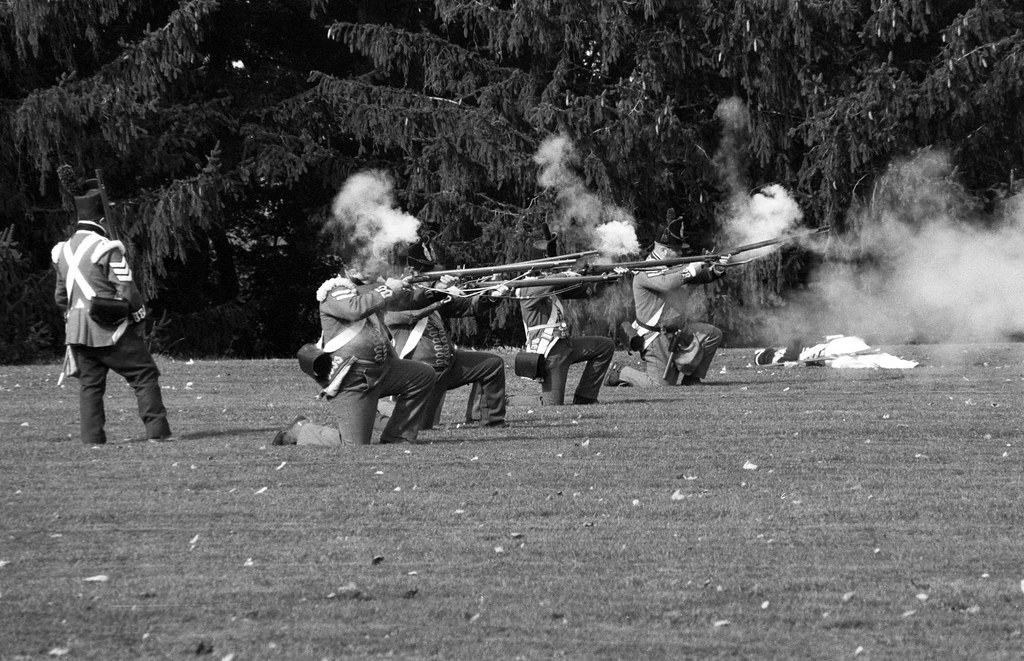


The Nikon F5 is among the many cameras I consider favourites. It’s a benchmark camera that I’ll usually use when results matter, and I’m in a professional setting. I’ve shot events, reenactments, and weddings with this camera. The main reason I do this is because of the F-Mount; not only can the F5 use my manual focus lenses (kinda, not the best), but also all my autofocus lenses, the AF, AF-D, and AF-G, without any trouble. The F5 also feels right in my hands; it’s big and bulky, and it always works. The meter is top-notch, the focus is a bit slow, but it’s never given me a problem, and the camera can take a beating and keep going. It also takes AA batteries, which have saved my bacon on a couple of occasions when I’ve run out of power and only had access to regular stores to get more. While it’s close to being a perfect camera, there are some troubles. The first is the size and weight; the battery grip is fully integrated into the body and cannot be swapped out, which does make it a pain to carry when you have a lot of extra kit on you. Second, it will eventually die, and there’s no one out there willing to repair the F5, so it will have to be replaced. But right now it’s still running strong.




Even though I know that the F5 will eventually die, it means that I don’t count it among those cameras that you’ll have to pry from my cold, dead hands. The biggest question I have to ask myself is, will I replace the F5 with another F5, or will I bite the bullet and go one step up to the F6? And after writing that question, a move up to the F6 is the right one, because I can get the battery grip and remove it. Making it far more helpful to me because it can be a smaller format alongside my D750, making it far easier when I need that smaller footprint. But until then, I’ll keep pushing the F5 to its limit.
Alex,
I’ve got an F80, it’s my travel camera, but I also have an F100, which I’d describe as the F5’s younger brother.
I’m not sure why, but resisting buying an F6, although I’m sure one will end up in my collection before too long
Yeah. The F4 for me. When I just want to take photos, it disappears in my hands. Really my FE2 does what I need, with much less weight. But the ergonomics of the F4 fit me just right.
Don’t have a F5, but I do have a F100, which I heard is 80% of what an F5 does.
Thinking of moving on to the F6 because the F100’s AF (which is the same module with F5) always focuses on something else other than the person’s eye… Do you have the same problem?
I don’t mainly because the F5 and by extension the F100 has a single focus point selection, so you need to mainly align the selected focus point where you want it, half press the shutter release then recompose.