When I started working on this series, I knew I needed to include a TLR on the list. But the biggest question is which TLR to include, as I’ve had three in my toolkit, all of which have had some impact on my photography. But after some thought, I settled on the Rolleiflex. The reason is that it’s been the longest-serving medium-format camera in my toolkit, and one I’ve been using before it was cool in this film photography resurgence. Does that make me a hipster?
Yes, it probably does. At least I don’t wear a beanie.

The Rolleiflex is not my first TLR; it is, in fact, my third TLR. I started expanding my horizons in film photography after listening to the Film Photography Project. The hosts, I believe it was Mike and Dwayne, were talking about 120 film and TLRs, Twin Lens Reflex cameras. Now I knew about SLRs, but not TLRs. I stumbled across my first TLR in the wild at an antique show in Milton. At one of the vendors, I found a pile of cameras, but a LOMO Lubitel 2 caught my eye. The vendor happily showed me how to use the camera, and I bought it for a reasonable price, far cheaper than what they go for today (after checking eBay, yes, far less than what they go for today on average). Despite its first glance, the Lubitel 2 is a true TLR, and you know the camera proved to be a gateway into waist-level-finders, medium format, and 6×6 photography. I used the camera through several rolls before seeking out something ‘better,’ and that ‘better’ camera turned out to be a Yashica-12. I bought that one at a dedicated camera show from an old professional photographer who used it as a second shooter next to his Rollei. If a pro was using one, it must be good, and I don’t think I paid too much for the camera. Then, in 2010, Tom, another member of Knox, saw me using my Yashica and offered to sell me his father’s Rolleiflex. Now this was before the vast trove of photos from Vivianne Myer had been discovered, and the cost was the low-low price of $300. Well, I jumped on that one. It turned out that the camera had been purchased in Germany in 1969 by Tom’s father. But I also got the camera, the leather case, all the manuals, boxes, the pistol grip, the hood, the tripod adapter, and some filters. Not too shabby. Of course, I didn’t know how to do it, and with the manuals all in German and the pictures a little vague, I was one wasted roll of FP4+ and one trip to Camtec before I learned how to use my Rolleiflex.
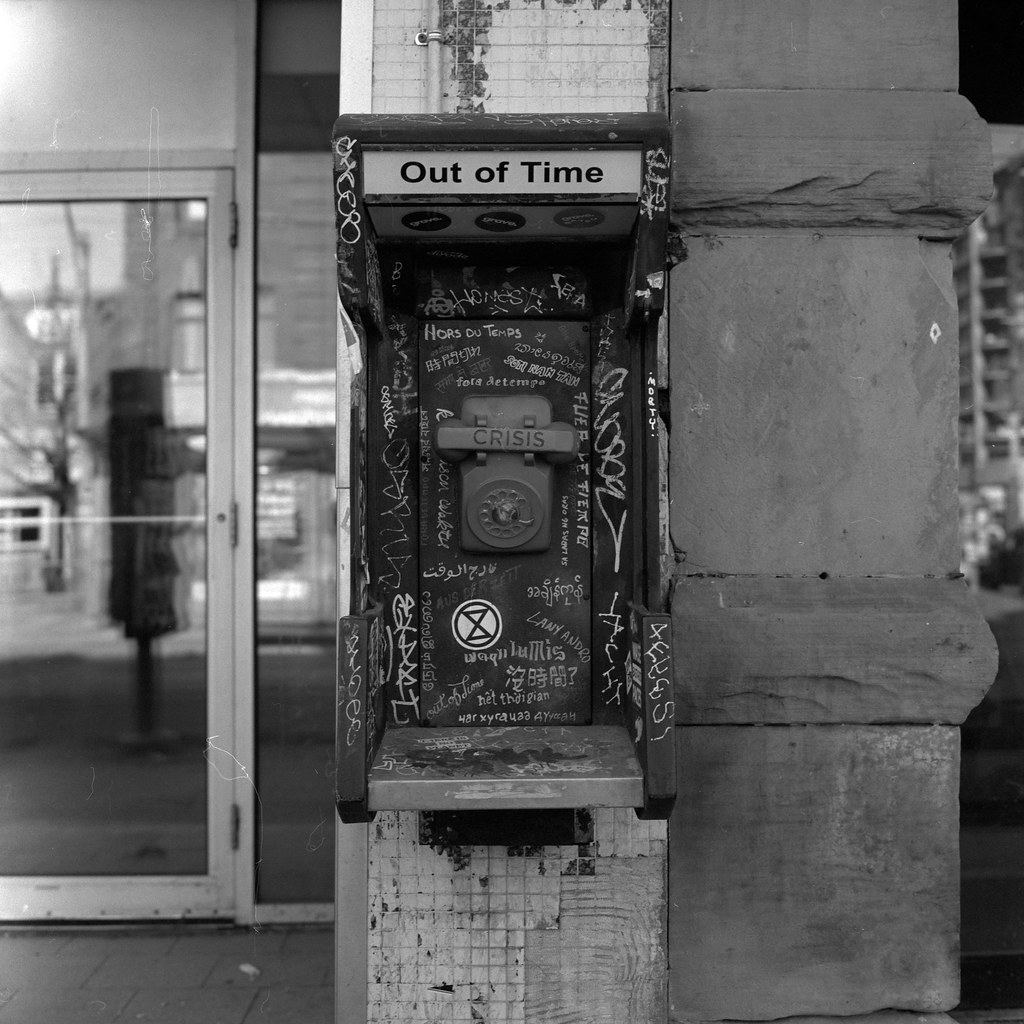


There are so many reasons why the Rolleiflex is important to me. I mentioned earlier that it is the medium-format camera that has stayed in my toolkit since it arrived and has seen near-constant use. It is also a camera that I know for a fact I’m the second owner of, which is something I know for sure about the family cameras I own. Second, as I mentioned before, this camera arrived before Myer shifted the zeitgeist and made TLRs popular in the broader photography community, especially Rollei TLRs. But I admit that after learning about Myer, I took my camera to Toronto for some street photography, which I enjoyed and got some good results from. But it certainly wasn’t my preferred tool for street photography. And third, this camera is fantastic: not only does it look like a stereotypical TLR, but it works really well and is backed by solid optics. Now I’m also helped by the fact that I got all the extras right off the bat, including two filters (yellow and green) and the hood. The hood is key because the planar design tends to flare. I never used the pistol grip, but the tripod mount has been super helpful.


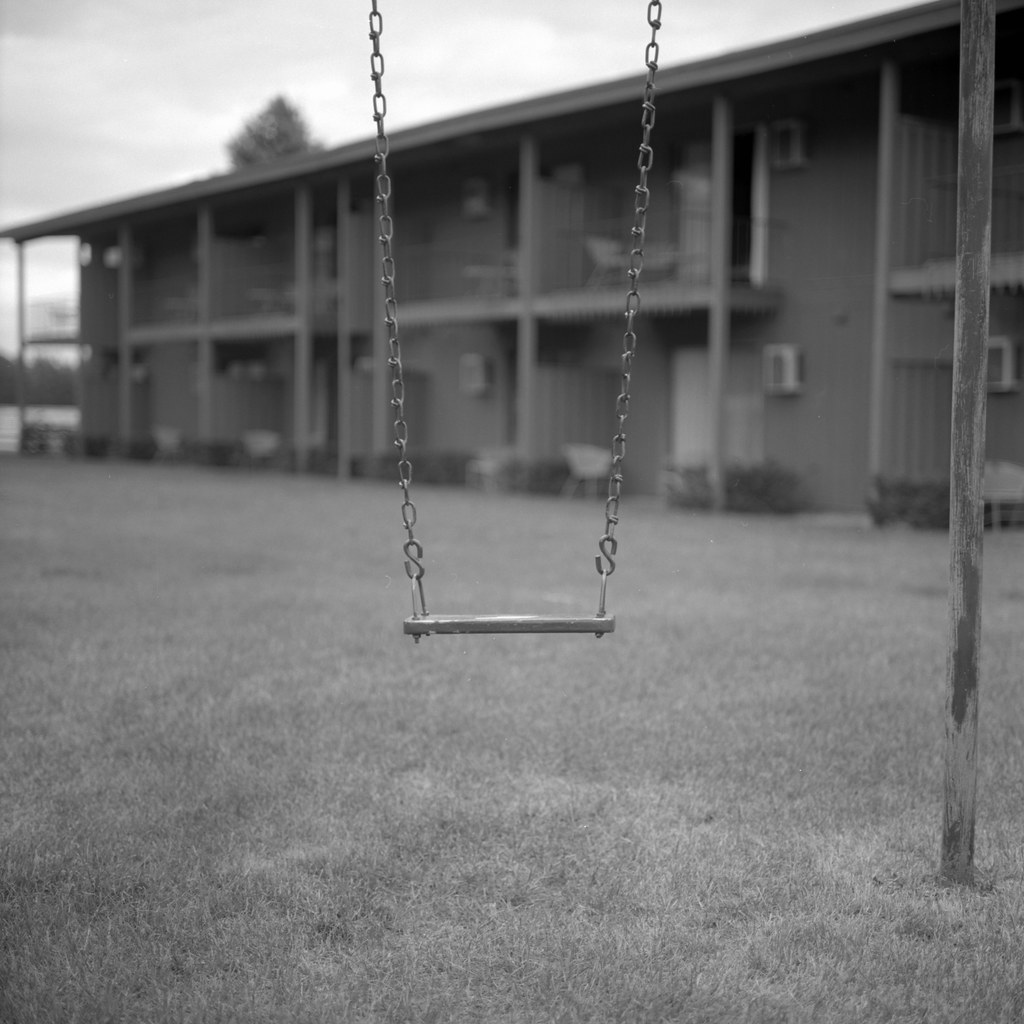
Whereas the Lubitel introduced me to TLRs and the 6×6 format, the Yashica-12 made me love the format; the Rolleiflex made it stick and made me figure out how to use it to the best of my abilities. The square format makes you rethink your composition, while 6×4.5, 6×7, 6×8, and 6×9 are easy to transfer from 35mm; square is different. I’ll admit it was a struggle at first. But the Rolleiflex came along at the right time as I was on the cusp of getting my head in order with that trip to Montreal and the first time I used the Rolleiflex in a big way. Now that trip didn’t make me a perfect 6×6 photographer right off the bat, but it gave me that confidence to keep working with the format. And after Montreal, I started parting ways with the Lubitel, went for the FPP for an early giveaway, and gave the Yashica-12 to a friend. I also got a Yashica 124, which quickly went to another friend. I did end up going the SLR route, with a Kiev 88CM and even a Hasselblad 500c. But even those have since left my toolkit, yes, even the 500c. But the Rolleiflex 2.8F stayed, and it continues to see use today. The cameras have come on numerous trips and urban exploration adventures. And even helped photograph a wedding. And so iconic has the Rolleiflex been to my photography, I created a graphic of the camera for my logo.


The Rolleiflex isn’t a perfect camera, but it comes close. There is a certain level of understanding needed, so it’s a good idea to read the manual. At least get a sense of how to load your film; the Rolleiflex threw me because you need to feed the film through some rollers, something that I never had to do with the Lubitel or the Yashica. Overall, the camera is compact; it takes up only a little space in a camera bag, making it perfect for travel. Also, a plus is that the camera has a light meter, it’s a Gossen unit that’s coupled with a match-needle. Having a meter is a plus, but it’s based on a selenium cell. Which means you don’t need a battery, but it will eventually die. Thankfully, the camera will still work without a working meter. Mine is still working and accurate, which, given the camera’s age, is impressive. Now, the lens on the camera is a Zeiss Planar 80mm f/2.8, which is the most desirable optics among Rolleiflex cameras. But to be honest, any lens on a Rolleiflex or Rolleicord is worth using, even a f/3.5 or a Schneider lens. The one thing that you should consider is getting a lens hood. The 80mm f/2.8 taking lens is paired with a matched 80mm f/2.8 viewing lens, which means that even with a stock focusing screen, it makes for a bright, easy-to-use setup. A viewing loupe helps with focusing, but I only use it when I’m unsure I’ve nailed the focus, especially when shooting wide-open. Now, the one thing that is a pain is the lens accessories, the hood, and the filters use a bayonet system, a bay-III size. This makes it difficult and expensive to get stock accessories.


The Rolleiflex is a camera that you will pry from my cold, dead hands. It’s not that I cannot get another Rolleiflex 2.8F (but I would have to pay ten times the price I paid), it’s the fact that I’m owner number two of this Rolleiflex, which makes it more special than any other Rolleiflex I could get. Also, knowing that pro photographers used Rolleiflexes means that those cameras are far more beat up than mine, which has been treated well by both owners. While this one is far more beat up now than when I got it, I’ve also used this camera a lot. So it has character. It continues to be my medium-format camera of choice, especially these days, when I have far less space for cameras. My one regret is not bringing it to Europe in 2015; it would have been that little bit extra. But it wouldn’t have come along to the battlefield (although it would have been so cool).
Alex
It’s Vivian Maier, not Myer.
Thanks for the reflections on the Rolleiflex.
Nice, well done architecture and street scenes.
T Max 100 at 32? Is that correct?
Thanks! And yes, TMax 100 at 32, gives a close modern equivalent to Panatomic-X!