When it comes to Tri-X, I’ve always seen this film as having a wide latitude. I have since learned that the new formulation, 400TX, first released in 2007, isn’t as good as the pre-2007 version, mainly because it has lower silver content. But when it comes to 400-speed films, Tri-X has been a long-time favourite of mine, so I figured it was time to get a full view of what the film can do and is ASA-1600 the best EI for Diafine?
Film Specs
Manufacturer: Kodak
Name: Tri-X 400
Type: Panchromatic B&W
Film Base: Acetate
Film Speed: ASA-400
Formats Available: 135 (35mm) & 120
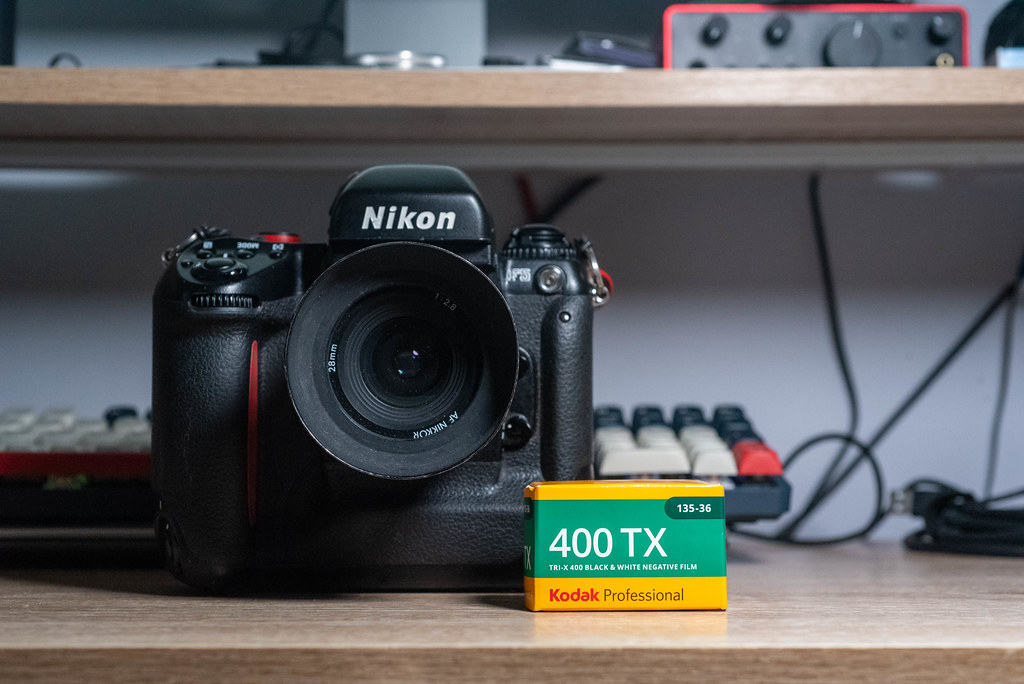
For this roll, I used ASA-400 (box speed) as my benchmark, then shot it between -2 and +2 stops, which translates to ASA-100 to ASA-1600. On the Massive Dev Chart, there is one listed time for Tri-X and Diafine, and that’s 3+3, and rating the film at ASA-1600. Now the last time I used this combination, it proved disappointing. But this is why I’m doing this series: to try and figure out what a good combination would be for me. I went with my Nikon F5 and the 28mm f/2.8 lens with the aperture set to f/8. Then I used the EV adjustment control to move between -2 and +2 using a remote release.


After pulling the negatives out from the tank I noticed that there is certainly a difference between all five frames, which is a plus because it does give me something to work with a write about. But they already looked better than the last time I had Tri-X running this hot and developed in Diafine, even at the -2 end of things. At the extreme ends there was a lot of density with the +2 and the frames were thin at -2, but the middle three frames all looked good, with the normal and -1 being the best of the lot. But in the case of all five there was still enough detail to make out the scenes. To be fair I was exposing the roll in some serious mixed lighting and conditions, but I know that Tri-X can work things out nicely.


After scanning in the negatives I started to see the differences a lot more clearly. Like I noticed with examining the negatives, there was plenty of details in all five frames, and with a bit of work even on the extreme ends I could easily recover the frames with a bit of work. At the extreme ends it might take a bit more work than the middles frames, with some loss of contrast and details in the shadows/highlights respectively. But a light touch would only be needed on the middle three frames. Honestly, it’s a good showing for both Tri-X and Diafine.


When going into this particular test, I was a little warry. The last time I was running this combination with my roll rated at ASA-1600, I had a poor showing. But I think that had more to do with the status of that particular roll. I also should have read the notes a little closer and would have see that the information provided was for the previous version of the film, pre-2007 Tri-X is different from the modern 400TX emulsion. Does this combination work? I think it does, but you want to rate your film at ASA-800 rather than 1600, but it will also do well rating it at box speed or slightly over (ASA-320). So I would say the 3+3 time is good for anything between ASA-320 and ASA-800. Can you take Tri-X 400 higher, yes but you will want to use a dedicated push developer like Microphen or Xtol and push your development longer.