I knew, I just knew that one day I would end up here with a large format camera. You could say I was influenced by the Film Photography Project and one of their hosts specifically. The Crown Graphic was one of three large-format cameras I owned and used; it was also the one that ‘fit’ my style of photography best, and the one I used the longest before I left the format. While not the largest format I used, 4×5 was the sheet film format that I used the most.

If I had to lay the blame for my getting into large-format photography, I would point the finger firmly at Mat Marrash. And I mean this is a good, friendly way. Mat is an amazing photographer and a big influence on me in terms of technique, though our subject matter choices differ. I first learned about large-format photography through the Film Photography Podcast and my interactions with Mat. And it resulted in my getting my first large-format camera in Rochester, New York, from a small camera shop run by a chain-smoking Dutchman, Dick Raas. The camera was a Graflex Speed Graphic, technically a Speed Graphic in name only. The shutter mechanism had been torn out, and it came with only a 207mm Kodak Ektar lens, which was actually from a 5×7 camera. But the thing was inexpensive, came with a couple of film holders, and didn’t smell too bad. I had to learn a new way to dance with the camera, and my first few shots were not that great; I was still learning. And learn I did! I got my hands on some more lenses and holders and started digging deep into the format. And despite being a bit beat up, the Speed worked really well until I had a bellows failure thirty-three weeks into a 52-sheet project in 2014. Thankfully, I was quick to find another 4×5: the Crown Graphic with a Xenar 135mm f/4.7 lens, in brilliant shape, at Burlington Camera. Well, it was the perfect fit. It worked almost the same as the Speed, but with all the needed attachments for handheld use, and it was designed from the ground up without a focal-plane shutter. I was also able to get some new lens boards because the Speed Graphic I had differs from the Crown Graphic. I did have a brief moment when I had a proper field camera, the Intrepid 4×5 Mk. 1, but it suffered a catastrophic failure. But the Crown Graphic stayed in regular rotation for almost a decade before I realised I wasn’t using large-format, and it went to a new home.
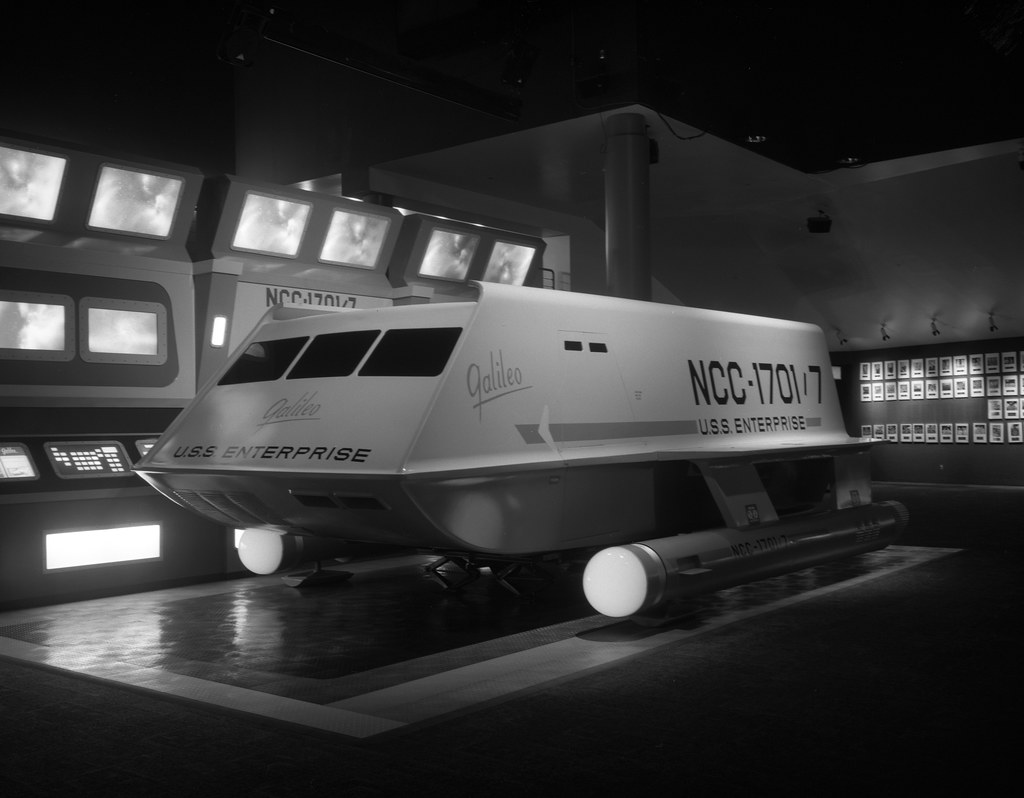


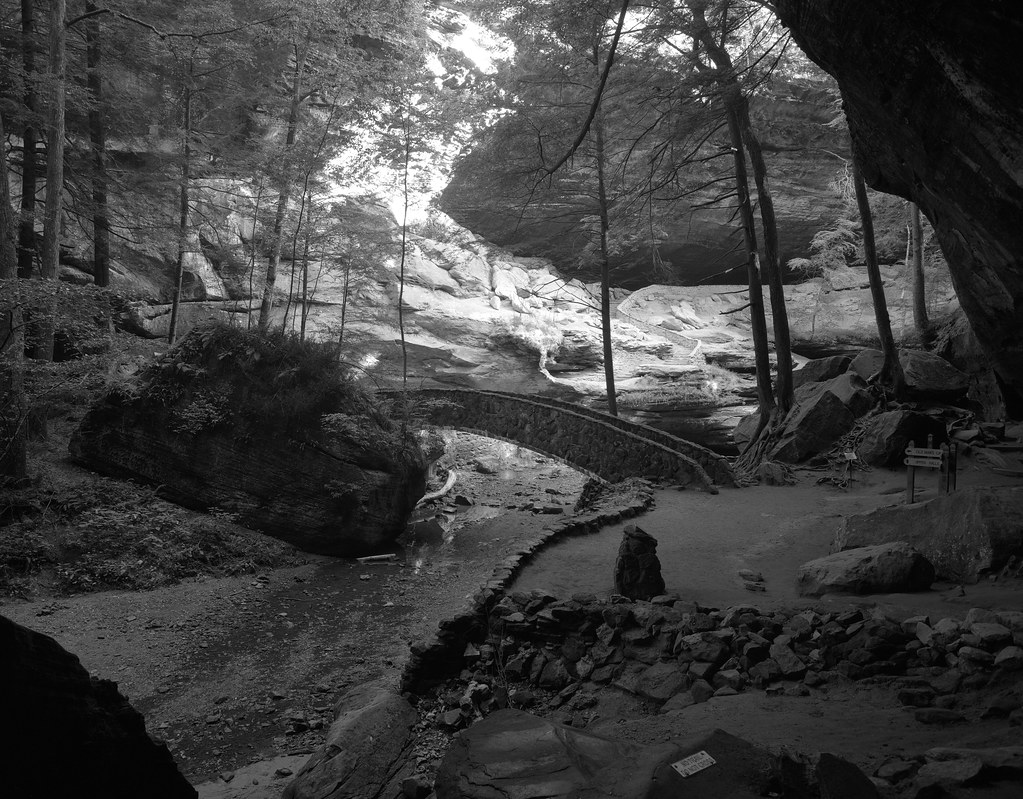
At the height of my large-format use, the Crown Graphic came almost everywhere with me; I would sacrifice space for other cameras to bring this beast along. Unlike some of my other cameras, you always had so many extra accessories with you to make it work properly. In some cases, I was an idiot to bring the thing along. I’m thinking about that trip to the Indiana Army Ammunition Plant. Bringing a large format along certainly was not required. But in other cases, I’m glad that I brought it along simply for the fantastic images that I was able to produce. And I wish I had taken the Crown Graphic on my trip to Nova Scotia, because it probably would have survived the drop, unlike the Intrepid. Looking back at all the images I made with the camera, the variety of places and subjects I was able to photograph is wild. It was hard to pick the photos to include in this post. The one that surprises me most is the filming model of the Star Trek shuttle Galileo on display at the Space Centre in Houston, Texas. The museum didn’t even bat an eye when I pulled out the tripod and the camera. I actually got a lot of amazing images from that Texas road trip on the Crown Graphic. But it wasn’t just Texas; the Crown Graphic also went along for an amazing trip to Hocking Hills with Mat, where I got some of my best landscape work. I took it on a camping trip to visit War of 1812 sites along the St. Lawrence River. It saw several dedicated projects on local churches, Milton, Oakville, railway infrastructure, and a few history projects.


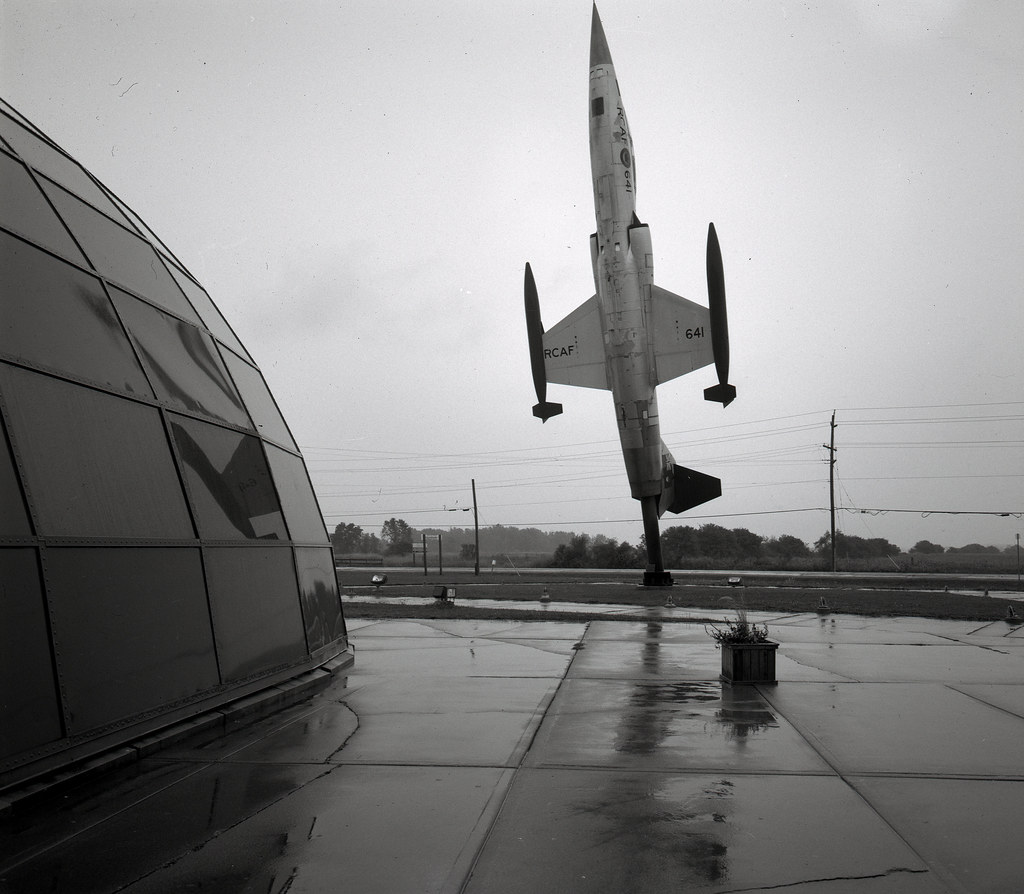
It’s cliché to say that film photography slows you down, and while not always true, large format forces you to slow down because if you move too fast, you’re going to make mistakes. I was already working on slowing myself down in my photography as a general practice, but large-format and the Crown Graphic made it a requirement. And that’s probably the biggest shift I saw in my work when I started using large-format in general, not just the Crown Graphic. While film always put a limit on how many frames you could expose, large-format photography only multiplied that limit. Sheets had a greater cost per shot, and you were limited by how many holders you could bring before it became untenable. I quickly learned to pre-visualise my photos, figuring out what I wanted my final image to look like, then applied the required metering, exposure settings, filters, time of day, and development to get that vision onto the sheet. I didn’t always achieve that goal, but I learned something every time. I learned to be patient with my work. But I also learned to use different metering techniques, a bit of the Zone System, and to see things differently. While I don’t use the format anymore, I feel I’m a stronger photographer because of my time with the Crown Graphic.


Large-format photography is not for the faint of heart; these cameras have no safety net, and if something goes wrong, you’ll mess up everything. You have to be on the ball at all times and figure out the best way to dance. Like there’s no safety net, everything here is manual, focus, metering, loading and unloading film. But of all the types of large-format cameras out there, the Crown Graphic and, by extension, any press-style cameras are probably the best to learn on for a beginner. First off, the cameras are easy to set up and take down; there’s no need to attach the bellows, press the button, and then have it pop out. They are also fairly inexpensive and rugged, so even older models are still in working condition. Focusing is done through a ground glass, and you’re looking right through the lens, so everything is upside down and backwards. It takes a bit to get used to, but with practice, you’ll eventually get it. While the back does have an integrated hood, a focusing cloth always helps; I always used a five-dollar black bath towel. You are also limited in your movements, which, when you’re just starting to learn, aren’t as important, but the Crown has the movements that count: rise, swing, and tilt. The one thing you do have to watch out for is that your lens projects a large enough image circle. And on the subject of optics, you have a ton of amazing lenses to choose from. Make sure that you do pick lenses designed for 4×5 or larger to ensure full coverage. Sure, you might get a great price on that one lens, but it might be for a smaller size, like 2×3. Personally, I used mainly Fuji optics, which are a great balance of affordability and quality. But I’ve also used Schneider-Kruznach, Nikkor, and Wollensak. If I had stuck with the format, I would have slowly started migrating to Nikkor, because, well, me. Despite the difficulties, the Crown Graphic is a great camera and a perfect way to learn to dance with large-format photography, and it might be a gateway to more advanced cameras like technical, field, and even monorail.

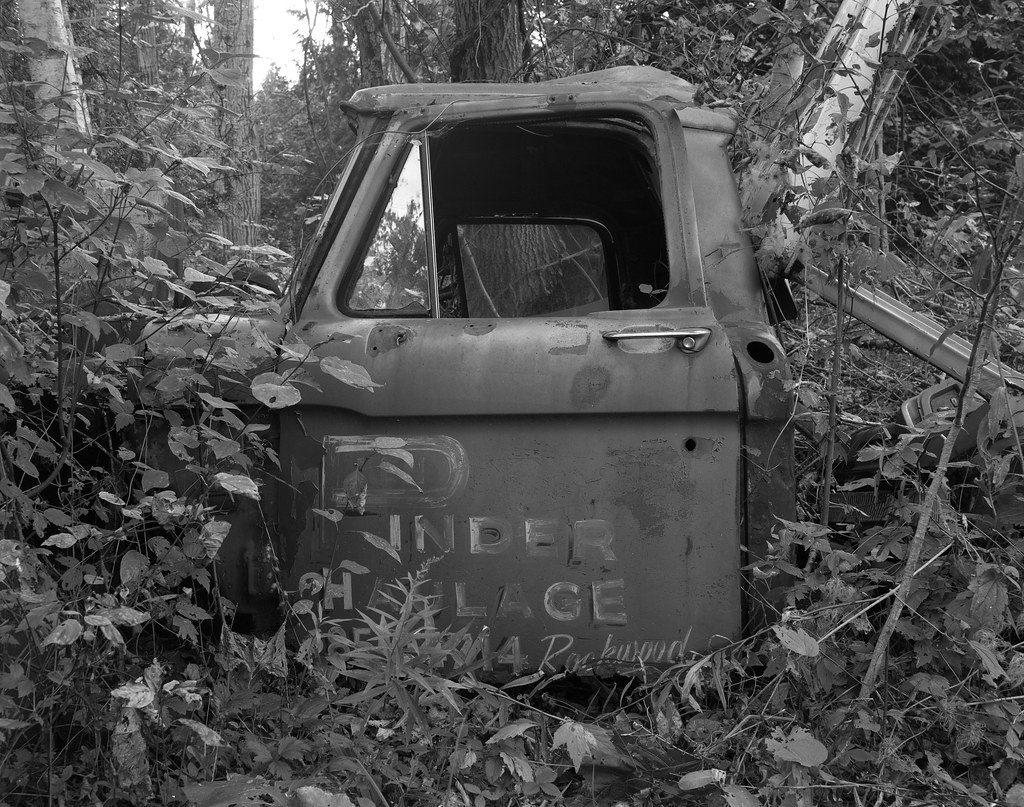
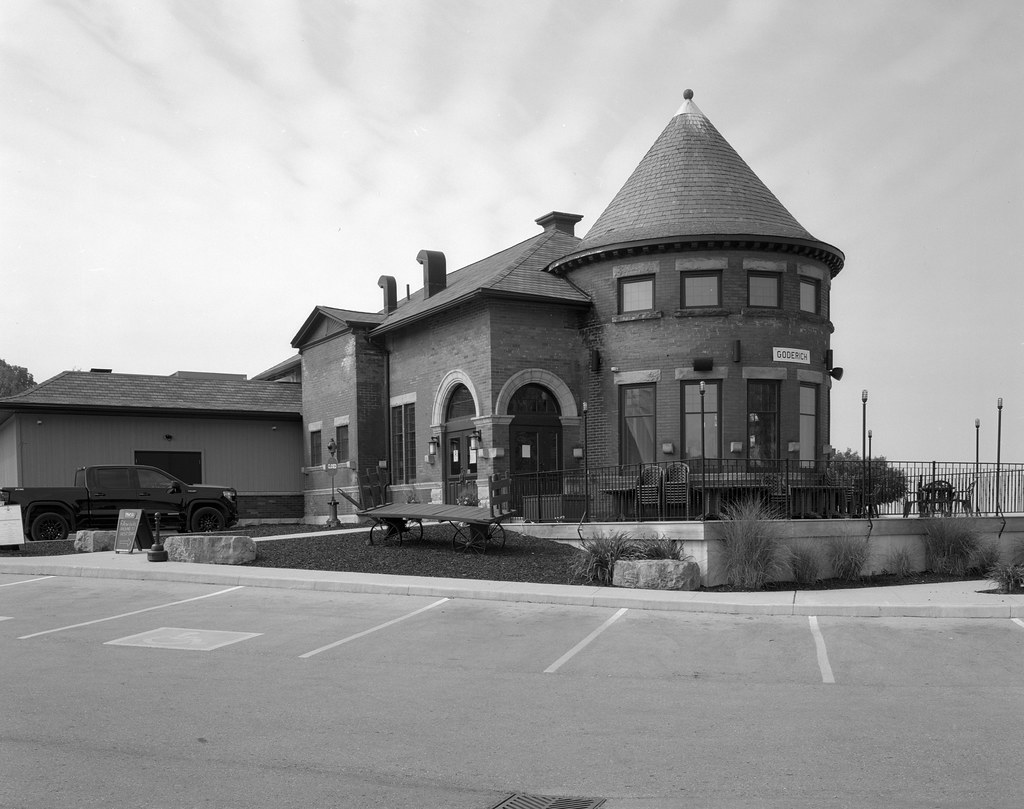

You can’t keep all the cameras. The last time I took the camera out was in the spring of 2024, specifically to shoot a review video. Before that, the camera hadn’t been taken in the fall of 2023. Honestly, the last time I shot the 4×5 in any significant way was 2022. That video took a lot of work because of everything you have to do to make 4×5 work and get the best images. And I struggled to make that video, I saw that in my facial expression as I edited the video and just how long it took me to put everything together. My favourite, however, was poking fun at all the comments I had received about my video choices. And then the camera just sat there in its storage box, and I soon realised that I had no drive even to use it. And that’s when I chose to sell off everything, and I mean everything. Lenses, holder, that bath towel, and even the developing tank, and it ended up going to someone who is making far more use out of the camera than I did for the past couple of years. And I don’t regret this choice at all, which means I made the right one. Do I regret even getting into large format? No, I learned so much from the format that I still apply today with digital, 35mm, and medium format.